Metering Multi-Model Agent Pipelines for Billing
Heterogeneous token counts require weighted conversion before billing aggregation.
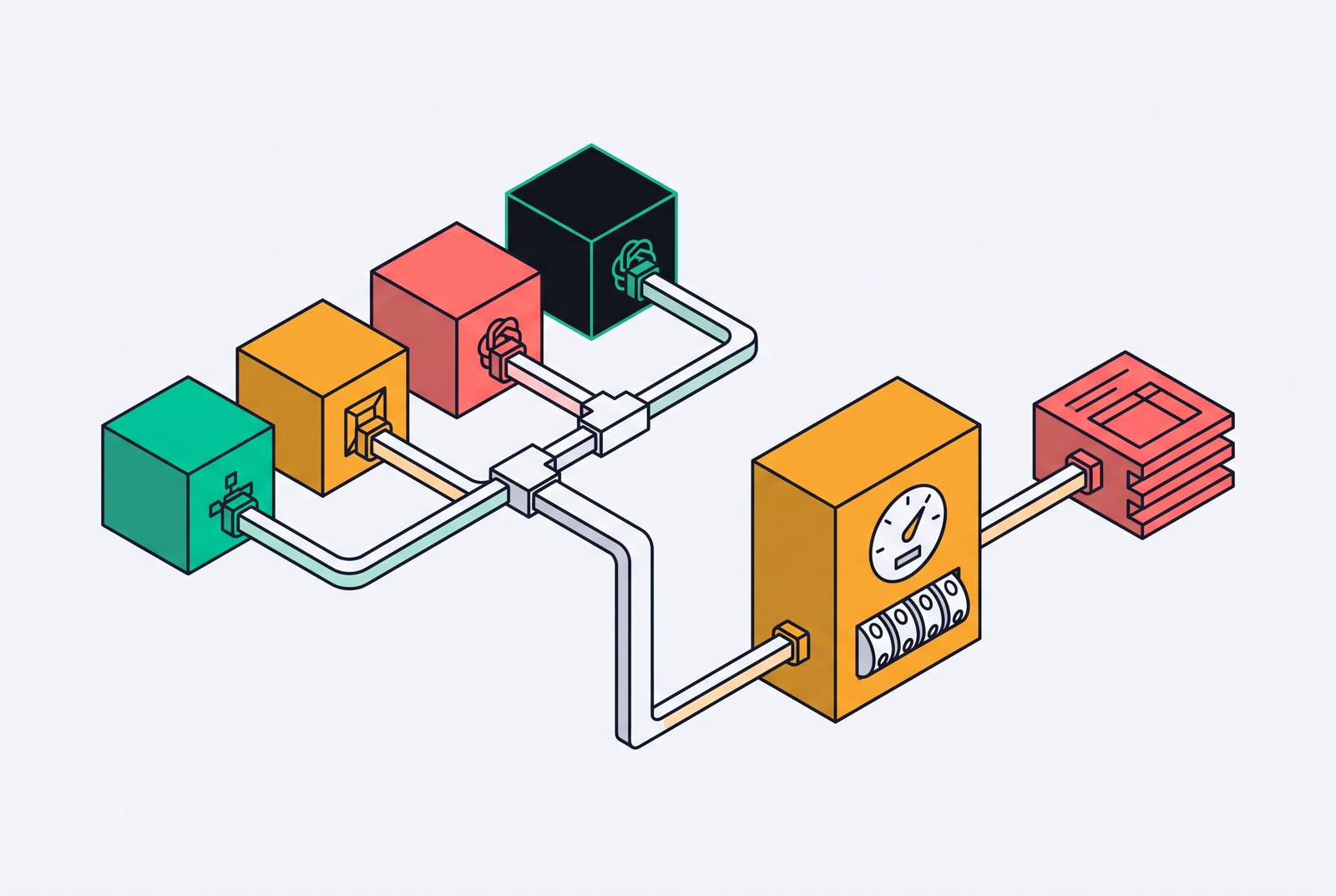
A single user request in an agentic pipeline can set off a chain of model calls that no seat-based pricing model was ever designed to capture. The core problem is not that usage is unpredictable. It is that raw token counts from different models at different prices cannot be summed into a meaningful billing unit at all.
The arithmetic failure is structural. That number is not an approximation of cost. It is a different quantity entirely.
The problem compounds along multiple dimensions. Input tokens and output tokens are billed separately by model providers, adding a second axis of non-equivalence that applies to every model in the chain. Prompt caching introduces further fragmentation: cache-read and cache-write tokens carry their own distinct prices, so the very definition of what a token means as a billing unit fragments across the pipeline. A metering system that treats all of these as an undifferentiated count is recording events, but it is not recording cost.
Agentic behavior makes the failure harder to see, not easier. A customer-visible action count can therefore hide wildly different underlying cost structures from one request to the next. The invoice looks stable while the margin behind it swings unpredictably.
The objection that falling model prices will make this problem disappear misunderstands what is happening. The structure of the problem is independent of the price level. A pipeline that cannot weight heterogeneous events today will be no closer to accurate metering tomorrow.
What the normalization layer actually does and why it must sit between raw events and the billing system
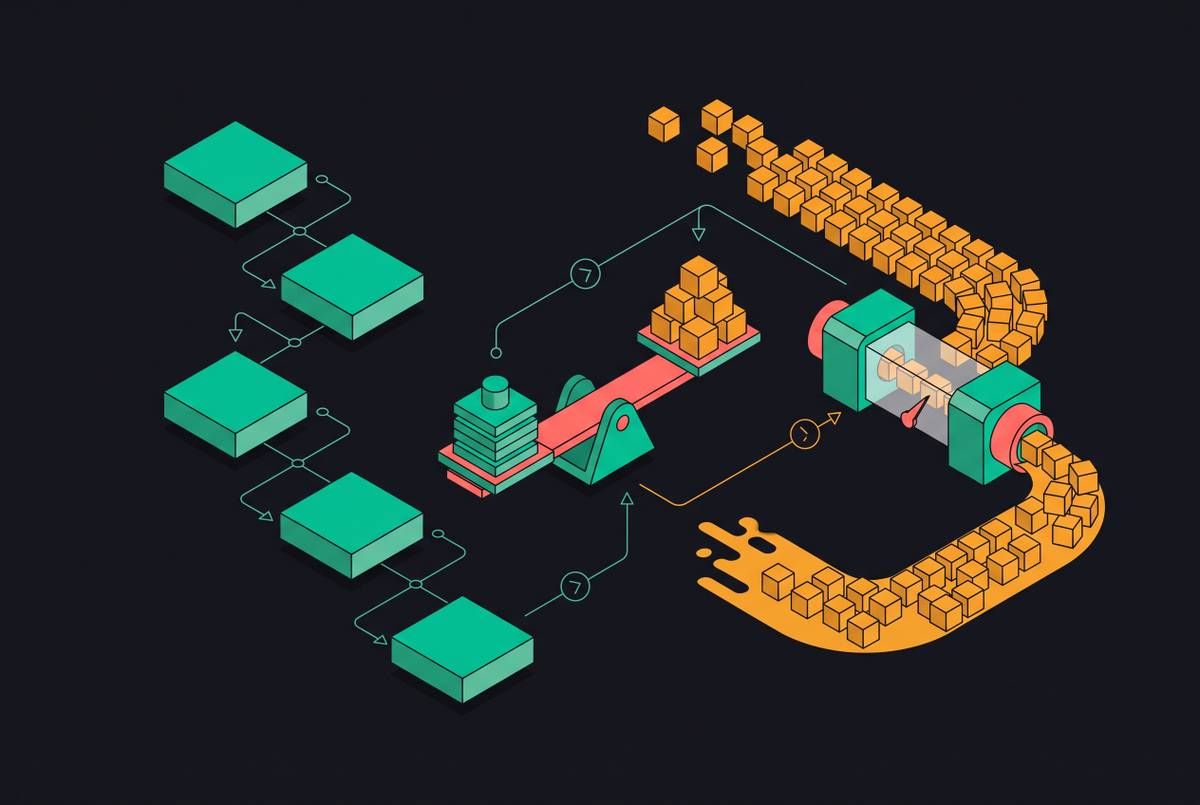
The normalization layer is a translation step with a specific job. It converts heterogeneous raw token counts, differentiated by model, call type, and token category, into a single weighted cost unit before any aggregation or invoice generation takes place. Until that conversion happens, no downstream system can interpret the numbers correctly.
Its position in the architecture is not optional. The layer sits between the event emission point, which is the LLM call site itself, and the aggregation store that feeds the billing engine. Without it, the billing system receives events it cannot interpret: token quantities without the price weights that make those quantities meaningful. The billing system is not wrong to fail on such input. It was never designed to hold per-model pricing rules for every call type in an agentic pipeline, and forcing it to do so creates a coupling that breaks with every model price change.
The timing of the weighting matters as much as the weighting itself. When a model price changes mid-cycle, or a routing rule swaps one model for another, the raw events no longer carry enough information to reconstruct what was charged and why. The result is an invoice that cannot be defended line by line.
This positioning also future-proofs the pipeline. The metering pipeline itself and the billing engine downstream remain unchanged. That separation is what allows the pricing team to operate without the platform team, and it is why the layer deserves to be treated as a first-class architectural component rather than a configuration setting inside the billing system.
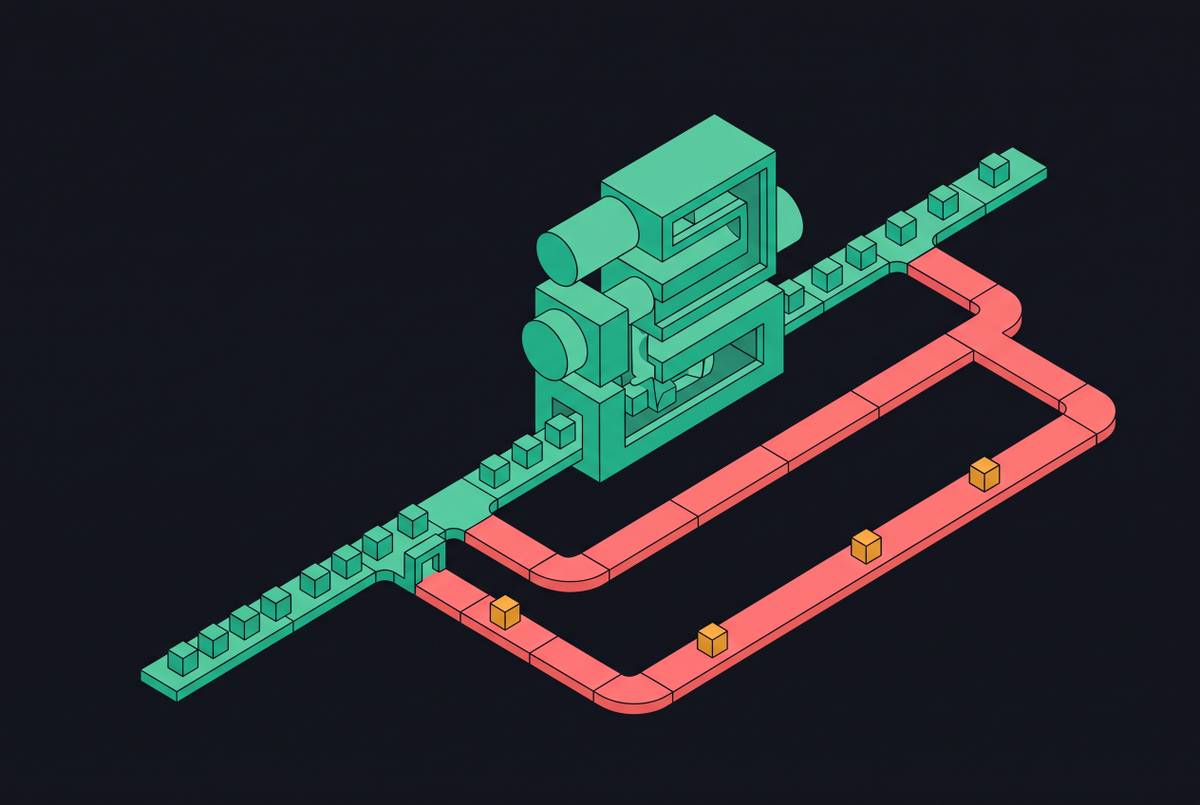
The events that leave the normalization layer must carry specific fields for the translation to be auditable. The idempotency key is not a convenience. Retries in agentic systems are common and often invisible at the billing layer, and a normalization process that double-counts a retried call produces a systematically inflated invoice that no amount of downstream review will catch.
Three ways the normalization layer fails in practice and what each failure costs
Most normalization failures are not bugs in the obvious sense. They are design choices that work passably at low volume and then silently produce wrong invoices as pipeline complexity grows. Each failure mode is a consequence of treating metering as simpler than it is, and each one compounds at scale.
The first failure mode is flat credit rates applied across heterogeneous models. The invoice looks fine. The unit economics do not.
The second failure mode is late normalization at aggregation time rather than at event emission. This is the tamper-proof metering problem in reverse: an immutable, append-only log of normalized events enables line-item reconciliation, but a log of raw token counts without attached weights does not. When the rule is applied a month later, that verification is impossible.
The third failure mode is retry events counted as billable consumption. Without it, the normalization layer cannot detect that two events represent the same logical call. The invoice appears defensible because nobody can trace it back to the raw events and see the duplication.
All three failure modes converge on the same downstream symptom: an invoice the customer cannot verify and the business cannot defend. That is not a technical inconvenience. It produces disputes, churn, and a steady erosion of trust in the pricing model itself, which is a far more expensive outcome than any engineering investment the normalization layer would have required.
The event schema that makes normalization auditable at every step of the pipeline
A normalization layer is only as reliable as the event schema feeding it. The schema is therefore not overhead. It is the data that makes per-trace, per-workflow, and per-model cost attribution possible.
The customer-facing fields establish who is responsible for the cost. Customer and workspace identifiers attribute each event to the correct billing entity, while agent and workflow type identifiers distinguish cost profiles across different agent types within the same account. A customer running both a lightweight document-classification agent and a frontier-model research agent will have very different margin characteristics between the two, and the metering system must see that distinction from the first event onward.
The trace identifier is what makes per-workflow attribution possible. The model identifier must be the specific model called, not a tier label. Tier labels change as vendors reposition their offerings, but model IDs are stable anchors upon which a normalization rule can be built reliably over time.
The call type and token fields carry the raw material for weighting. Cache-read and cache-write tokens are similarly separated wherever prompt caching is in use. Collapsing any of these distinctions before the normalization step destroys exactly the information the weighting calculation needs.
The output fields make the event auditable after the fact. The outcome status field, which distinguishes success, retry, failure, and escalation, determines billability: a failed call that retried successfully should produce one billable event, not two. And the idempotency key prevents double-counting in the downstream aggregation, including in the retry loop case the schema is designed to catch.
The schema also enables real-time credit-balance checks that prevent runaway agents from consuming a customer's entire monthly budget on a single badly bounded task. Without outcome status and trace identifiers, the system cannot detect that an agent is in a retry loop until it has already burned through the balance. The fields that make an invoice auditable are the same fields that make enforcement possible, and both requirements point to the same instrumentation standards at the call site.
Why the pipeline must be asynchronous and streaming, not synchronous and batch
At the volume and speed of agentic inference, metering is fundamentally a streaming infrastructure problem. A synchronous billing API with a counter bolted onto the side of the agent's request path will either block the agent's critical path or lag so far behind that credit enforcement becomes fictional. Neither outcome is acceptable for a product whose customers expect real-time spend visibility.
The first requirement is asynchrony. A message queue, whether that is Kafka, SQS, or Redis Streams, sitting between the event emission point and the normalization layer decouples event production from event processing. A spike in agent activity then creates backpressure in the queue rather than slowing the agent itself.
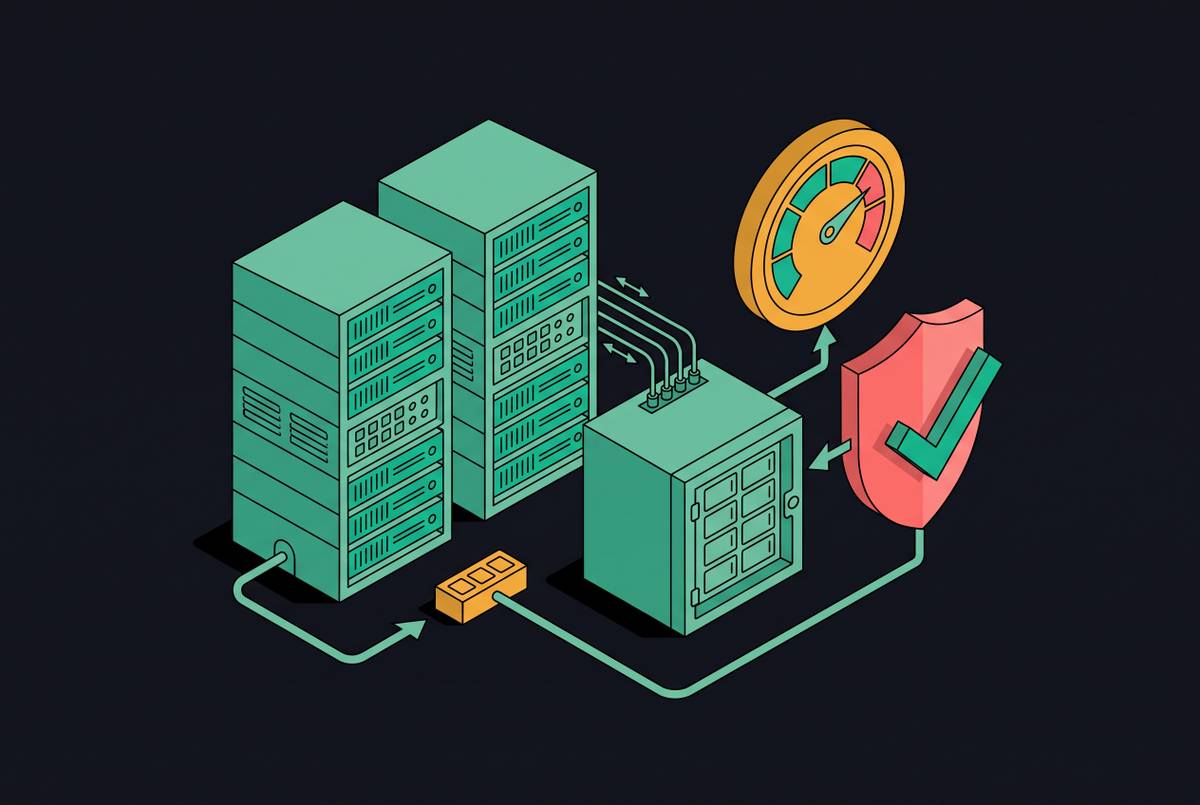
The aggregation layer needs a different storage profile than the billing system. The architectural split between the metering layer and the billing layer is not an organizational preference. It is load-driven: the two layers sustain different access patterns, different write rates, and different consistency requirements.
Latency is a correctness problem in this pipeline, not merely a performance issue. A pipeline that reports usage with a fifteen-to-thirty-minute lag cannot stop a runaway agent before it has already overrun a customer's budget. The lag made real-time enforcement impossible.
The tolerance for small overdraft windows is a deliberate design choice at this layer, not a bug. But the overdraft window must be bounded, and the system must catch the overage within seconds at the next check. That is the practical reconciliation between real-time enforcement and not interrupting a paying customer mid-task.
The practical implication for teams is that the event pipeline is often already present. Teams that operate Kafka and ClickHouse for analytics and anomaly detection frequently find it reasonable to extend that pipeline to serve metering, because the events serve multiple purposes and the infrastructure is not billing-specific. The billing and invoicing layer that sits on top is the part worth buying, while the pipeline itself is the part worth owning.
Choosing what the normalized unit should be: dollars, credits, or a custom metric
The choice of normalized unit is a pricing and trust decision before it is a technical one. Custom outcome metrics align the invoice with customer value. Each involves a different set of trade-offs that must be resolved before the normalization layer is implemented, because the choice determines what fields the schema must capture and what downstream systems can do with the events.
Normalizing to dollars is the most transparent option. The risk is that dollars tie the business to underlying model prices in a way that exposes margin when normalization rules are not updated quickly enough after a provider price change. The invoice moves with cost, but the customer's price expectation may not, and the business absorbs the gap.
Normalizing to credits is the most common abstraction for AI products with mixed workloads. The requirement is that credit values assigned to different actions must be visible and stable enough that the customer can budget against them before usage. Opaque credits that cannot be predicted in advance produce bill shock, which is the primary driver of churn in consumption-priced AI products.
Normalizing to outcomes is the most value-aligned choice and the hardest to implement correctly. Intercom's Fin charges from $0.99 per resolved outcome. Outcome-based normalization requires a clear, contractual definition of what constitutes a billable outcome, because the grey zone around "resolved" or "completed" is a dispute risk if not specified precisely. The metering layer must capture outcome status reliably for every workflow, and that requirement flows directly into schema design.
Hybrid structures, such as a subscription base that includes a credit allotment with overage billed per additional unit, are common in practice because they give customers a predictable floor while capturing value from heavy users. The normalization layer operates the same way regardless. The unit choice feeds backward into the event schema: an outcome-based model requires outcome status captured at the workflow level, not just the inference-call level, while a credit model requires the normalized cost unit field to carry a credit value rather than a dollar amount.
Real-time credit enforcement and spend visibility as outputs of a correctly built normalization layer
A normalization layer that produces weighted, trace-linked, outcome-stamped events in real time is the prerequisite for every downstream control a customer needs to trust a consumption-priced product. Enforcement and visibility are not features layered on top of billing after the fact. They are outputs of correct normalization architecture, and a pipeline without that architecture cannot offer them retroactively.
Real-time credit balance checks are only possible when normalized cost units are available at sub-second latency. A pipeline that reports usage fifteen minutes after it occurs cannot enforce a budget limit before a runaway agent has already exceeded it. But the window must be bounded in seconds, not minutes, and the system must catch the overage promptly enough that the next request is blocked before compounding damage occurs.
Customer-facing spend dashboards require the same normalized, trace-linked event data that enforcement uses. Architecturally, that is the same requirement as enforcement, implemented as a notification trigger rather than a block. When the underlying event data is correct, both features fall out of the same aggregation pass.
The business case for investing in this layer is not just cost control. AI and metered products that cannot show customers their in-flight consumption generate bill shock, churn, and support costs that typically exceed the cost of building the visibility infrastructure in the first place. The layer pays for itself by preventing the failures that make consumption pricing untrustworthy in the customer's eyes.
Tamper-proof logging, cryptographic signing of each normalized event pushed to an append-only log at creation, makes every usage record independently verifiable by the customer, an auditor, or a downstream agent. The enterprise customer does not want an invoice. They want a chain of evidence from usage record to billed amount, and that chain is only as strong as the normalization event that anchors it.
Where the build-versus-buy decision actually falls in a normalization architecture
The build-versus-buy decision for agentic billing is not one decision but two. The event pipeline is legitimately buildable for teams that already operate this infrastructure for analytics. Extending it to carry metering events costs far less than building it from scratch, because the hard infrastructure already exists and is already maintained. For these teams, owning the event pipeline is the natural default rather than a stretch.
The normalization layer is where ongoing maintenance cost concentrates. Getting it wrong does not fail loudly. It produces invoices that are subtly incorrect, which is precisely the class of failure that takes the longest to detect.
The case where building the full stack is legitimate is narrow and specific. It applies when billing is genuinely core product IP, as with payments companies or billing infrastructure vendors themselves, or when data residency requirements make cloud-hosted billing infrastructure legally unusable. The latter constraint is real for healthcare and financial-services companies with strict data sovereignty requirements, and a billing platform that cannot be deployed on-premises or in a sovereign cloud is disqualified from those deals before evaluation begins. The practical middle path that many teams reach is to own the event pipeline because it already exists and serves analytics, while buying the normalization rules management and billing engine because those are the parts that require ongoing precision and produce no competitive differentiation. After working through the argument, a team that has taken normalization seriously arrives at this conclusion naturally: the accuracy of the metering layer and the integrity of the invoicing layer are table stakes, and the differentiation comes from the product that sits on top of them.