On-Premises Billing Platforms Meeting SOC 2 Type II Requirements
On-premises billing systems must prove security controls worked consistently, not just on paper.
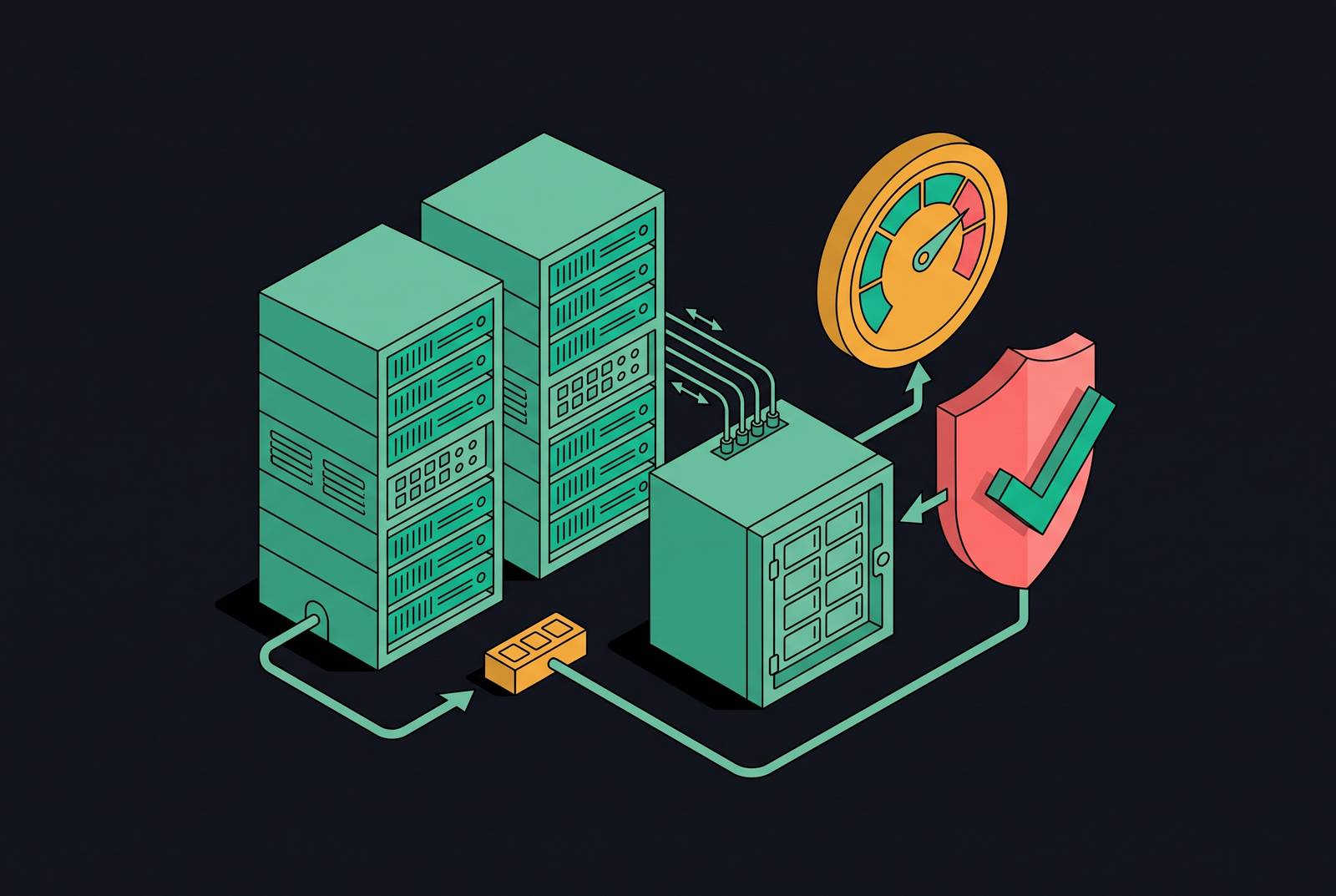
On-premises billing platforms carry a compliance burden that cloud-hosted competitors simply don't face. Deploy billing infrastructure on a customer's own hardware, and the whole stack, from the data center floor to the application code, falls inside the audit boundary that SOC 2 Type II examines.
What SOC 2 Type II tests and why the observation period changes the stakes
SOC 2 is an AICPA standard that governs how organizations handle sensitive data: financial records, personal information, transaction logs. It measures performance against five Trust Services Criteria: Security, Availability, Processing Integrity, Confidentiality, and Privacy. Most enterprise buyers care about all five, but for billing systems, three tend to generate the most audit friction.
A Type I report is a snapshot. It tells an auditor whether controls are designed properly on a given day. A Type II report tests whether those controls actually held up, day after day, over a 6 to 12 month window. That distinction matters more than most vendors admit up front. A company can write a beautiful access control policy the week before an audit, but a Type II auditor wants proof the policy was followed in March, June, and September, not just the week it was drafted. Enterprise procurement teams know this, which is why vendor security questionnaires routinely require Type II rather than Type I.
For a billing platform, Security (the CC1 through CC8 controls covering logical access, monitoring, and change management) forms the base everything else sits on. Processing Integrity, under PI1, asks whether transaction data stayed accurate and complete across the entire billing lifecycle, and whether an auditor can trace how a given charge got calculated and reconciled. Confidentiality, under C1, becomes especially pointed for any platform holding multi-tenant financial data across separate enterprise clients, since a single access control slip can expose one customer's invoices to another. Emerging guidance has pulled AI and machine learning systems that touch customer data into CC6 scope, which matters for any billing tool using ML for usage aggregation or anomaly detection.
None of this rewards good intentions. A control that exists on paper but has no evidence trail showing it ran consistently is a finding. Cost tends to track that rigor: a Type II audit for a small or midsize organization typically runs $30,000 to $50,000 in 2025, with auditor fees alone typically in the $10,000 to $25,000 range plus internal prep time, and larger or more complex environments can run $30,000 to $150,000.
The expanded audit surface an on-prem billing deployment adds to every Trust Services Criteria
Move billing infrastructure on-premises, and physical security stops being someone else's job. Auditors expect camera coverage on every entry and exit point, and some will walk the facility in person to check it. They want locked server racks with a documented list of who holds keys, visitor logs that match badge swipe records exactly, current inspection tags on fire suppression systems, and clear documentation of power and cooling setups.
A locked server room, on its own, proves nothing to an auditor. The "castle and moat" instinct, the idea that a secure perimeter is enough, doesn't hold up under Type II scrutiny. What holds up is a documented, repeatable process with an evidence trail behind every access event, logged consistently across the full observation period.
Network controls shift the same way. A cloud provider like AWS handles firewall management, patching, and perimeter monitoring behind the scenes for a SaaS vendor. On-prem, the operator owns all of it. Every firewall rule change needs a documented change management process behind it, beyond a tightly configured ruleset. Network segmentation between billing systems and the rest of the internal network has to be demonstrated with diagrams and logs, not assumed because it seems obvious. Intrusion detection and log retention, both handled by managed cloud services in a SaaS deployment, become the operator's responsibility to build and maintain.
Personnel controls widen too. Background checks now apply to anyone with physical or administrative access to the billing servers, extending beyond cloud console access. Provisioning and de-provisioning need to tie cleanly to HR events, someone joining, changing roles, or leaving. Teams that can modify billing logic need to be separated from teams that can view financial records, and that separation needs its own paper trail.
Then there's the hardware itself. Patch management for the operating system, the database, and the billing application all fall on the operator now, work a cloud provider absorbs invisibly in a SaaS arrangement. Hardware nearing end-of-life but still running billing workloads draws auditor attention. Configuration baselines need documentation too, since an auditor needs a picture of what "normal" looks like before they can spot what deviates from it.
Colocation facilities offer a partial shortcut: some physical controls map onto the colo provider's own SOC 2 report. But the deploying organization still has to obtain that report, read it closely, and account for any gap in its coverage as its own gap. The IBM Cost of a Data Breach Report 2024 puts the global average breach cost at $4.88 million, with third-party software breaches often running higher and taking longer to catch, a figure that procurement teams cite regularly in conversations to justify exactly this level of scrutiny.
Where billing-specific data flows create the highest-risk audit findings
Billing systems sit on the exact data auditors worry about most: payment instrument details, financial transaction records, and in usage-based pricing models, granular behavioral data showing how an enterprise customer actually consumes a product. That combination makes billing infrastructure a magnet for CC6 findings.
The most common one has nothing to do with the billing database itself. It's PII turning up somewhere it shouldn't, a customer's card details pasted into a support ticket, a financial identifier sitting in a log file, a snippet of transaction data copied into an internal wiki page. Auditors flag this even when the core billing system is locked down tight, because the failure is about where sensitive data traveled, not where it started.
Vendor scope drift is another recurring gap. A payment processor or sub-processor added partway through the year, without a corresponding update to the compliance scope, creates a blind spot. On-prem environments make this worse, because a new integration might touch the physical network directly instead of connecting through a cloud API, which widens the blast radius if something goes wrong.
API security matters just as much internally as externally. API vulnerabilities accounted for 54% of successful financial system breaches in 2024, and a billing platform's internal usage-ingestion or invoicing API needs the same authentication, encryption, and logging discipline as anything exposed to the public internet, regardless of whether it only runs on an internal network.
Processing Integrity brings its own set of risks specific to usage-based billing. Audit trails have to show usage events were captured completely and accurately, and metering errors carry a documented industry cost of 3% to 7% of revenue when they go uncaught. Re-rating events, the recalculations that happen when pricing rules change mid-cycle, need to be fully traceable, which is why event sourcing architectures built on append-only, immutable logs function as both an operational choice and a compliance requirement. Reconciliation has to run on a documented, repeatable process too: a finance team that spends the first week of every month manually fixing billing errors can't also claim a clean Processing Integrity control, because the manual correction is itself evidence the control didn't work.
Encryption expectations go beyond TLS in transit. Stored billing data needs AES-256 encryption at rest, key management ideally backed by Hardware Security Modules, and sensitive billing identifiers need classification and tokenization. On-prem deployments can't lean on a cloud-native key management service like AWS KMS without explicitly scoping that dependency into the audit, since the whole point of on-prem is reduced reliance on the cloud provider's infrastructure. Financial data breaches cost enterprises an average of $4.45 million in 2023, a number that explains why enterprise procurement treats billing security reviews as a real gate, not a formality.
How the coordination burden of on-prem SOC 2 differs from what cloud-native billing teams encounter
A cloud-native SaaS billing audit is mostly a one-team job. Security or compliance staff pull evidence from cloud console logs, IAM configurations, and the cloud provider's own attestations, and much of the evidence burden is addressed by the provider's own SOC 2 report.
On-prem audits pull in at least three departments that don't normally coordinate on compliance work. IT and infrastructure teams handle hardware lifecycle records, patch logs, network diagrams, and firewall change history. Facilities teams hold physical access logs, environmental inspection records, and visitor management data. HR supplies access provisioning records tied to employment events and background check documentation. Getting all three to produce clean, matching evidence on the same timeline is its own project.
Auditors sometimes want to walk the physical facility, and that part can't be handed off to a compliance automation tool. Someone has to be there, in person, answering questions about badge readers and camera coverage in real time.
Evidence collection gets more manual across the board. Badge swipe logs need to be exported and cross-checked against visitor sign-in records. Camera footage retention policies need documentation and proof they're actually followed. Hardware inventory has to stay current enough that every server running a billing workload shows up on the asset register without gaps. Compliance automation platforms such as Vanta, Drata, Secureframe, and Sprinto were built primarily around cloud API integrations, so on-prem organizations often end up supplementing them with manual work even after paying for the software.
The coordination load compounds further when a third-party vendor ships the billing software into the customer's own environment. The vendor has to document application-layer controls, while the customer documents everything underneath it, the operating system, the network, the physical facility, and an auditor needs both halves before forming an opinion on the full scope. Enterprise procurement questionnaires spanning hundreds of questions are standard at this point, and a SOC 2 Type II report covering the on-prem environment functions as an answer key that clears most of those questions at once. Without it, compliance teams answer each one by hand, screenshot by screenshot.
What to look for in a billing platform's own SOC 2 posture when deploying it on-premises
Once a billing platform runs on a customer's own hardware, the audit scope splits cleanly in two. The vendor answers for the application layer: authentication, role-based access inside the billing interface and API, session handling, secure development practices, and how quickly known vulnerabilities in the software get patched. The customer answers for everything underneath that, including the physical facility, the operating system and database, the network perimeter, and the people with physical or administrative access to the server. Buyers need to know exactly where that line falls before signing anything.
A vendor's SOC 2 Type II report, in an on-prem context, does not cover the customer's data center, the customer's operating system patching cadence, or the customer's network firewall rules, no matter how strong the report reads. Flexprice, a metered billing platform built for AI and SaaS companies charging by consumption, sits in exactly this application layer when deployed on customer infrastructure. ZoneBilling's Type 2 SOC 1 and SOC 2 completion, audited by A-LIGN for the period from January 1, 2024 to June 30, 2024 and announced on October 15, 2024, is a useful illustration of what a vendor-side attestation actually covers: the vendor's own application and operations, nothing about the customer's infrastructure. Buyers evaluating any billing vendor should read the scope section of the report itself, going beyond confirming that a report exists.
Ask any vendor a few questions directly before deployment. What system boundary does the SOC 2 report actually define, and does that boundary include the application as it runs inside a customer's own environment? What documentation does the vendor hand over to help a customer build its own audit evidence for the application layer? How are software updates delivered on-prem, and is there a documented change management process behind each one? Does the platform support key management based on a dedicated hardware security appliance, or does it assume access to a cloud key management service that might not exist in an air-gapped setup?
A billing platform genuinely built for on-prem use should run inside sovereign clouds or fully air-gapped environments without needing to phone home to the vendor's own infrastructure. Any dependency like that pulls the vendor's systems into the audit scope in ways that are hard to explain cleanly to an auditor. Purpose-built metering and billing platforms add a layer worth understanding here too: the platform's own change management, access controls, and transaction integrity become part of what the on-prem audit has to cover, so operators need to show not just secure infrastructure but billing logic that behaves the same way, month after month, under scrutiny. API quality plays into this more than it might seem. A poorly documented event ingestion API pushes engineering teams to build custom abstraction layers around it, and each of those custom layers is more surface area the compliance team has to document and the auditor has to review.
The data residency and regulatory context that makes on-prem billing compliance increasingly urgent
SOC 2 sets a floor, not a ceiling. Billing platforms deployed on-premises in regulated industries also have to satisfy sector-specific frameworks layered on top of it: HIPAA in healthcare, DFARS and CMMC for defense contractors, GDPR and its various national implementations across European operations. Passing a SOC 2 Type II audit doesn't excuse a healthcare billing deployment from HIPAA, and it doesn't excuse a defense contractor from CMMC.
The regulatory map keeps expanding. Between 2011 and 2025, the number of countries with active data protection laws grew from 76 to more than 120, with more still moving through legislative process. Every new jurisdiction with its own residency requirement adds pressure toward on-prem or sovereign-cloud deployment models, since keeping billing data inside a specific geographic or legal boundary is often easier to prove with infrastructure the enterprise controls directly. That trend runs in one direction, and it's the reason SOC 2 Type II readiness for on-prem billing has moved from a niche procurement concern to a standard line item in enterprise sales cycles across healthcare, finance, defense, and manufacturing alike.
Sources
- ZoneBilling SOC 1 and SOC 2 compliance announced
- SOC 2 Type II or Bust: 2025 Compliance Checklist for Embedded Accounting APIs | Open Ledger | Open Ledger
- How Much Does SOC 2 Cost? Complete Pricing Breakdown (2025)
- SOC 2 For On-Prem: Best Practices and Key Steps for 2026 | Konfirmity
- SOC Compliance Guide for MSPs: SOC 1 vs SOC 2, Type I vs Type II
- konfirmity.com