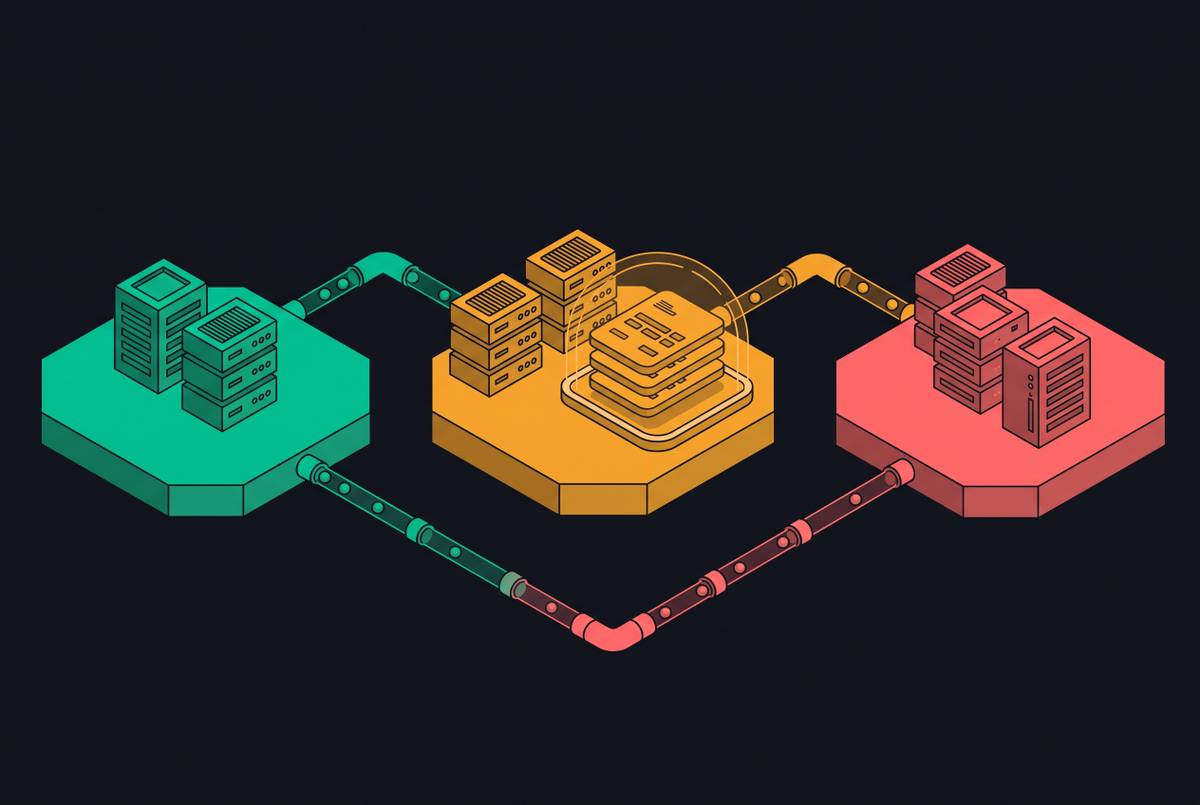
Audit Trails and Billing Dispute Resolution for Enterprise Contracts
Audit trails prevent billing disputes from turning into costly forensic investigations.
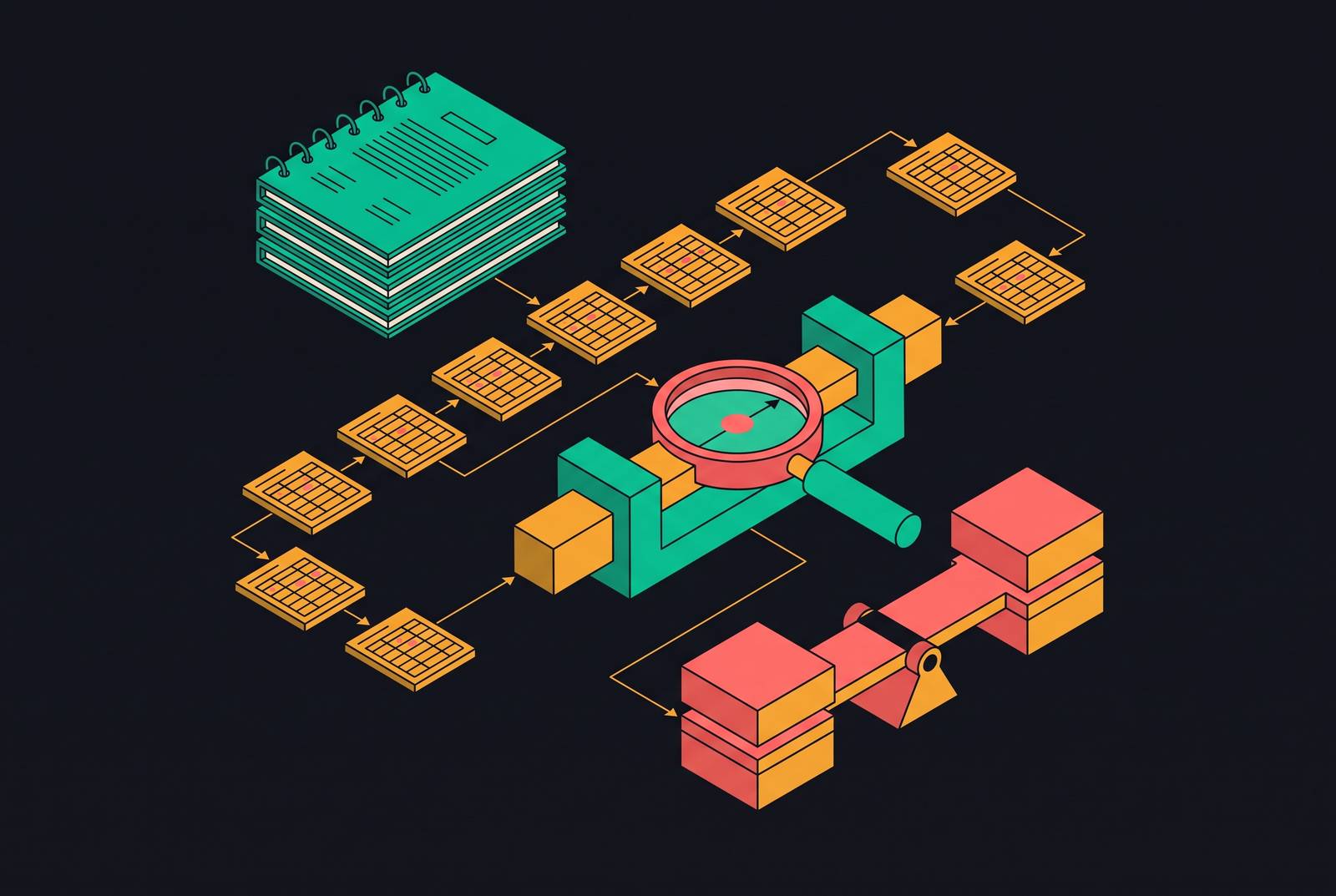
Enterprise billing has a math problem hiding inside a trust problem. When a contract charges by usage, every invoice carries variable line items a customer can question, and the only way to answer that question fast is if every usage event, every pricing rule, and every invoice calculation got logged the moment it happened. Skipping that discipline turns a billing dispute into a forensic reconstruction project instead of a lookup, the kind that consumes significant finance and engineering time to settle an argument over a relatively small sum.
What an audit trail needs to contain for billing disputes to be resolvable
Start with the atomic unit: the usage event. Metering, invoicing, and audit all depend on that event carrying a stable, explicit contract. If the event itself is ambiguous, nothing built on top of it can be trusted later, no matter how good the dashboard looks.
A dispute-ready event needs five fields, and none of them are optional. A stable, immutable customer and project identifier, so nobody can reassign an event to a different account after the fact to make a number look better. An action timestamp recording when the action actually occurred, not when the system happened to emit the event, because asynchronous pipelines introduce lag, and lag changes which billing period an event belongs to. Atomic unit and quantity kept as separate fields, rather than pre-multiplied into a single number nobody can unpack later. A correlation ID tying the event back to the originating request, session, or agent run, so a support engineer can trace an invoice line item straight into application logs. And an explicit billable flag with a reason code sitting in the event itself, not buried three layers down in downstream logic where nobody can audit it without reading source code.
Deduplication is not a nice-to-have. Networks fail, retries happen, and without a unique event ID the system can recognize and discard, customers get charged twice for the same action. That's the fastest way to manufacture a dispute out of nothing, and it's usually the first thing a customer's finance team catches, because double charges appear in expense reports before anyone on the vendor side notices.
Durability matters as much as completeness. A service that keeps usage counts in memory loses them the moment it crashes, and a lost event is indistinguishable from an event that never happened, at least until the customer's own logs disagree with the invoice. The only reliable substrate is a durable event stream, one that survives restarts, deploys, and outages without silently dropping anything.
Pricing rule versions need the same treatment. A rule has to be captured at the moment of rating, not reconstructed from whatever the pricing configuration happens to say today. An invoice from six months ago has to be explainable using the pricing logic that was actually live six months ago. If that version isn't stored, there's no honest way to answer a dispute about it, only a guess dressed up as an answer.
A usage dashboard is not an audit trail. A pile of aggregated totals isn't one either. What resolves disputes is an immutable, event-level log with pricing-rule provenance attached, nothing less, and teams that settle for less find that out at the worst possible moment.
Real-time stream processing as the source of audit immutability and traceability
Stream processing applies metering, aggregation, and rating logic to events as they arrive, rather than in a batch job running hours or days later. That timing difference is the whole point: the record of what happened and when gets created at ingestion, not reconstructed afterward from whatever logs survived the outage.
The architecture looks similar across serious implementations. Events land in a message broker such as Kafka, stateful transformations sum activity per customer per billing period, and results get written to a billing state store with sub-second latency. Kafka in particular has become the dominant broker for real-time billing at scale, valued for its ability to buffer events and absorb back-pressure when volume spikes without warning, which, in usage-based billing, it eventually always does.
Scale changes what "good enough" means, and this is where a lot of teams misjudge their own trajectory. At low volume, a Postgres database with idempotent inserts handles the job fine. Once a team crosses roughly 10 million events a month, it needs a streaming pipeline with at-least-once delivery guarantees, full stop, no exceptions carved out for "we'll get to it next quarter." At 100 million events a month, retransmission, replay, dead-letter queues, and tracing stop being optional. At 1 million transactions per second, the infrastructure reaches the upper end of what serious billing platforms run in production, and the engineering complexity of operating at that scale is substantial even for well-resourced teams.
Capturing raw events instead of pre-aggregated totals is what lets a team audit, dispute, and re-aggregate as pricing logic evolves. Pre-aggregation throws away the granularity that makes a dispute resolvable in the first place: once three million API calls collapse into a single monthly number, there's no way back to the individual calls a customer is questioning.
Late events, corrections, and backfills happen constantly in production billing. A dispute-ready system has to re-rate usage and amend invoices without falling back on manual credits, and that only works if raw events get retained rather than discarded after the first aggregation pass.
AI workloads make this harder in a specific way. An agent loop can fan out into hundreds of downstream calls, and token consumption swings wildly depending on what the user asked the model to do. One customer sends three API calls one day and three million the next, and traditional API billing, built for steadier, more predictable traffic, was never designed to attribute or meter that kind of spike correctly. These are exactly the conditions under which disputes start, and the vendors still running batch-based metering are the ones who feel it first.
The five layers of a billing workflow where audit gaps typically open
Billing runs through five layers: metering, rating, reconciliation against signed terms, invoice generation, and revenue recognition. A dispute can originate at any one of them, so audit coverage has to exist at every layer, including the point where the customer sees the final number.
Metering is where "I wasn't charged for what I actually used" disputes usually start. Events arrive late, get duplicated, go missing, or get mapped to the wrong customer entirely, and any one of those failures produces a bill that doesn't match reality.
Rating is where finance loses the ability to explain a number. This happens most often when pricing rule versions aren't stored at the moment of rating, or when tiers, credits, minimums, discounts, and negotiated contract terms all get applied somewhere downstream, invisibly, in logic nobody outside engineering can inspect.
Invoicing is where customers directly demand proof. The audit trail has to link every line item on an invoice back to the raw events that produced it, or the finance team is stuck saying "trust us," which satisfies nobody holding a six-figure contract.
Collections stalls when nobody's sure what changed. An overdue usage invoice sits untouched because the team can't say with confidence what got billed and why, and without that clarity, nobody wants to be the one to escalate it.
Reconciliation and reporting break down when systems disagree. When billing records, CRM data, and accounting entries don't match across systems, that's rarely a data-entry mistake. It's a sign the audit log never spanned the entire billing stack to begin with.
Hybrid and outcome-based contracts pile complexity specifically onto rating and invoicing. More pricing dimensions mean more audit surface area, and finance teams spending the first week of every month reconciling billing errors aren't looking at an invoicing problem. They're looking at a symptom of gaps upstream, at metering or rating, and no amount of invoice-layer polish fixes a hole that opened two steps earlier.
Teams running fragmented billing codepaths make this worse. Pairing a metering tool with a separate billing tool, stitched together after the fact, means the two systems never share one event ledger. Any gap between them becomes a permanent, compounding audit blind spot, and that gap only widens as volume grows.
Enterprise contracts and their impact on audit coverage stakes
Enterprise revenue concentrates in custom contracts. Once a customer's spend settles into a consistent range of a few thousand dollars a month, the natural endpoint is a committed minimum paired with a negotiated overage rate, and that structure is where most AI SaaS revenue ultimately lands.
Committed minimums create a specific kind of dispute. The customer believes consumption fell below the minimum and no overage is owed; the vendor's system says otherwise. Without event-level logs, neither side can settle that argument quickly, and both sides know it going in. That is why these disputes tend to drag rather than resolve.
Outcome-based contracts turn the outcome itself into the contested object. Intercom Fin charges per successful resolution rather than per conversation, billing only when a case is resolved and not when it escalates to a human agent. Zendesk runs a comparable model priced per automated resolution, with bundled resolution counts before overages apply. HighRadius charges as a percentage of measurable savings, collecting only after those savings materialize. In every one of these models, how "success" gets defined determines the entire bill, which gives the vendor a structural incentive to mark something "resolved" that wasn't quite. Enterprise buyers negotiating outcome-based deals should expect, and should demand, the right to audit outcome data directly rather than take the vendor's word for it. A vendor that resists that request is telling you something about how confident it is in its own resolution counts.
Multi-currency and cross-border complexity adds an audit dimension most teams underestimate. A platform with currency or geographic limitations gets disqualified from international enterprise deals before anyone even evaluates its dispute-resolution features, and audit logs need to preserve the exact currency, exchange rate, and jurisdiction that applied at the moment of the transaction, not whatever the current rate happens to be when someone pulls the record later.
Pricing changes mid-contract compound all of this. A meaningful share of enterprise contracts will be mid-cycle when a pricing change lands, and logged rule versions become the only honest way to confirm a contract is being honored as written, rather than as currently configured on whatever system happens to be live that week.
Billing infrastructure requirements for point-in-time dispute resolution
The core capability sounds simple to describe and is genuinely hard to build: ingest usage events at millisecond speed, apply pricing rules at rating time, log the event and the rule version together, and make the whole chain queryable. Done right, a dispute resolves by pulling a dated record. Done wrong, it turns into a multi-week timeline reconstruction involving three teams and a spreadsheet nobody quite trusts.
Real-time spend visibility for the customer belongs in this infrastructure, not bolted onto it as an afterthought. Customers should see current consumption and a projected end-of-month invoice based on their current usage pace, because bill shock, an invoice that lands with no warning attached, is one of the more common reasons customers churn out of usage-based pricing. Spend alerts and hard-limit enforcement, the kind that blocks a request the instant a customer exceeds their credit balance, depend on that same real-time metering pipeline being complete and current.
Prepaid credit wallets running alongside postpaid invoicing raise the bar further. Credit drawdown events, when credits were used, how many, against which original grant, have to sit in the same ledger as postpaid usage events, or an invoice blending the two becomes impossible to reconstruct without guesswork.
Pricing configurability is itself an audit property, even though it doesn't look like one at first glance. If changing a pricing rule requires filing an engineering ticket, there's a window where the live system and the contracted price are out of sync, and that gap is exactly where future disputes get born.
Pairing a separate metering tool with a separate billing tool creates a specific failure point: the event the metering tool counted and the charge the billing tool applied live in two different systems, and reconciling them after the fact is manual work, every single time. A system handling both closes that seam permanently, rather than requiring someone to re-close it every billing cycle.
Schema versioning ties the whole thing together. When pricing models change, old and new events need to coexist and remain re-ratable, which is what makes "what would this customer have paid under the old pricing" answerable as a quick lookup instead of a weeks-long rebuild.
Build vs. buy for audit-capable billing infrastructure
Most teams that choose to build underestimate the job by an order of magnitude, and the ones that get burned tend to get burned quietly, one pricing change at a time, until the audit trail that was accurate on launch day no longer matches reality. Event ingestion, deduplication, durable storage, schema versioning, pricing rule versioning, real-time aggregation, invoice generation, and a queryable audit log all need to work together. Building one of these layers well doesn't produce the other seven for free, and treating them as a checklist to knock out in a sprint is how teams end up with an audit trail that only covers half the billing stack.
The scale progression makes the engineering escalation concrete. At 10 million events a month, a team needs a streaming pipeline. At 100 million, dead-letter queues, tracing, and dedicated auditing layers become mandatory rather than nice to have. At 1 million transactions per second, the build takes many months, even for teams with real engineering depth and no shortage of budget.
Pricing changes expose the weak point in most in-house builds fastest. A homegrown billing system that handled the launch pricing model fine tends to start cracking the moment finance wants to add a new tier or a hybrid pricing dimension, and for most of these systems, that means the audit trail was correct on day one and has been quietly degrading ever since.
The real cost of open-source billing infrastructure appears after the initial build, in the engineering team that has to own, patch, and debug the thing indefinitely, long after the people who built it have moved on to other projects. That's not a one-time cost. It compounds every time the pricing model changes and nobody who remembers the original design decisions is still around to update it.
The build argument collapses fastest around late events and corrections. Supporting re-rating and raw event retention requires a purpose-built, append-only event store with replay capability, and that's not a feature most teams scope into version one of an internal billing system. It doesn't feel urgent until the first serious dispute lands on someone's desk, and by then the fix is a rebuild, not a patch.
Buying changes who can answer a billing question, and that's the part build-first teams tend to miss going in. A purpose-built platform gives finance direct visibility into billing data without routing every request through engineering. That's a structural property of the platform, not a setting anyone configures after the fact, and it separates a dispute getting resolved same-day from a dispute sitting in an engineering backlog behind three sprint priorities.
Evaluating billing platforms on audit and dispute-resolution capability
A useful evaluation model splits into six dimensions: recurring invoicing, usage-based pricing, dunning, revenue recognition, implementation burden, and the manual work still required between deal close and a live subscription. Every one of these six carries audit implications, even the ones that don't sound like it at first.
On metering integrity, check first whether the platform stores raw events or only pre-aggregated totals, because that single design choice makes a dispute six months from now either a lookup or a dead end. Check second whether pricing rule versions get captured at rating time or only exist as the current live configuration, since the latter makes it impossible to honestly explain an old invoice. Check third how the platform handles late events and backfills: can it re-rate usage and amend an invoice, or does it fall back on manual credits every time something arrives out of order?
On contract fit, ask whether the platform supports committed minimums with overage logic that logs the comparison it made, not just the final number. Ask whether it can log outcome-based billing events with enough detail to satisfy an audit rights clause without a manual data pull, and whether it preserves currency, exchange rate, and jurisdiction at the moment a cross-border transaction actually happened, rather than defaulting to whatever rate applies on the day someone runs the report.
None of this is abstract for enterprise buyers negotiating usage-based or outcome-based deals. The audit trail is the mechanism that turns "trust us" into "here's the record." In a metered contract, that difference is the entire relationship, and a vendor that can't produce the record when asked has already told you how the next dispute is going to go.