Versioning Pricing Rules Without Breaking Existing Subscriptions
Isolate pricing versions from live subscriptions to prevent silent re-rating and billing disputes.
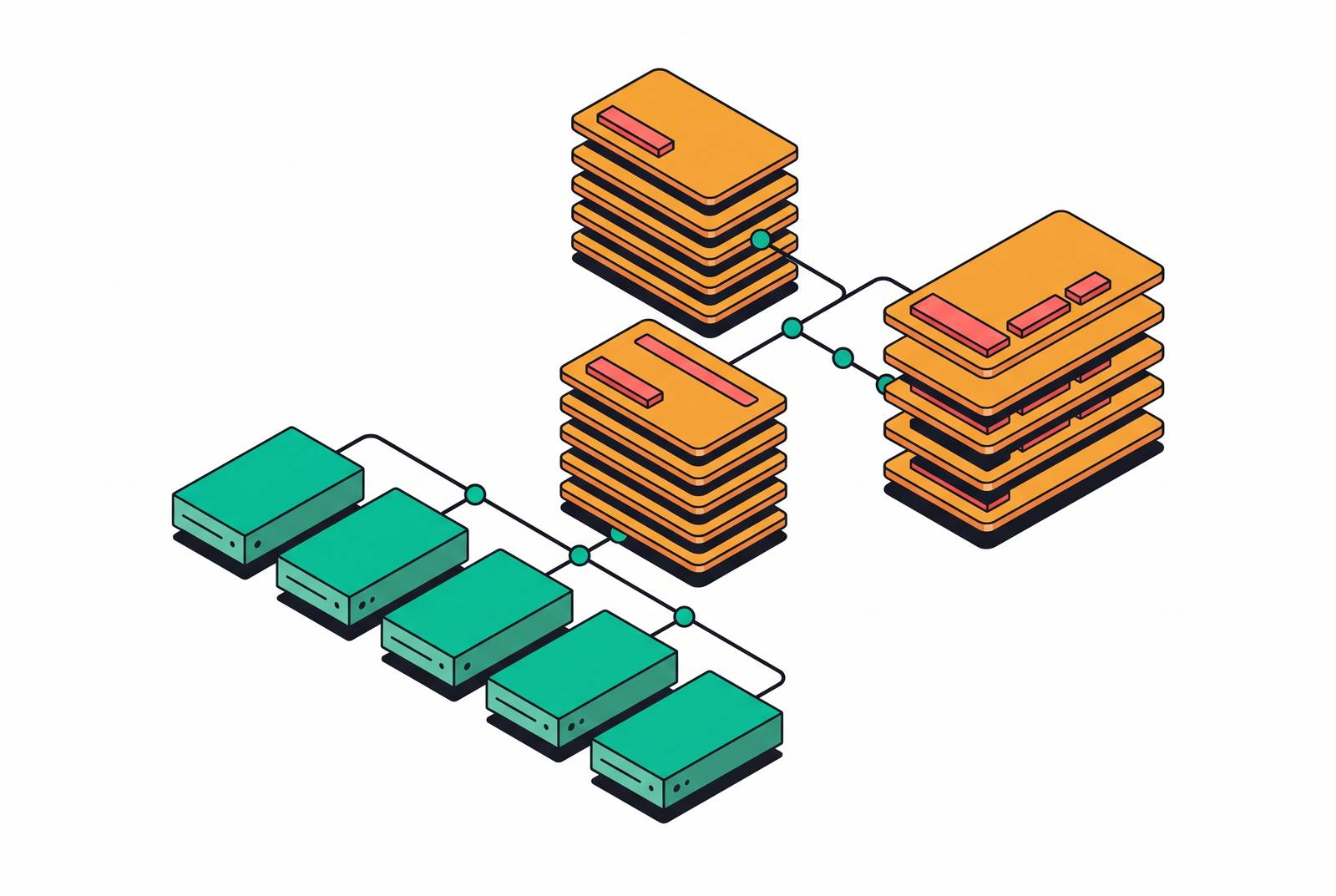
A pricing rule is the combination of a metric being measured, a rate or tier applied to that metric, whatever credit or entitlement logic sits on top, the currency and billing period, and the eligibility conditions that determine which customers and which plans it touches at all. It's rarely just a number on a pricing page.
In usage-based and credit-based billing, this gets compositional fast. A single rule might read: deduct one credit per 1,000 tokens, with a floor of ten credits per request, resetting monthly. That's four or five variables, and any one of them can shift independently of the others.
Underneath that rule sits a pipeline with four layers: ingestion, where raw events land; metering, where those events get aggregated into usage metrics; rating, where pricing rules get applied to those metrics; and invoicing, where the rated charges become a bill. A pricing rule change can touch one of these layers or all of them at once, and the layer it touches determines how dangerous the change is.
Most teams get one distinction backwards, and it's the one that matters most: the pricing catalog, which defines what rules exist, is a different object from the subscription contract, which records which version of those rules a specific customer agreed to. Collapse the two, and every catalog edit becomes a live edit to every contract pointing at it. Nearly every failure mode described below traces back to that single modeling mistake, and no amount of process discipline fixes it if the data model itself refuses to keep the two apart.
One more asymmetry worth stating plainly: an event is immutable, while a pricing rule isn't, not by default. The danger shows up the moment a rule change reaches backward and re-rates events that were already recorded under a prior rule. Hybrid pricing models, the kind combining subscription access with usage-based consumption, make this worse because they run three rule types at once: access rules governing what's unlocked, consumption rules governing how usage gets metered and priced, and overage rules governing what happens once a customer blows past a cap.
The failure modes that happen when pricing versions are not isolated
Billing breakage is rarely dramatic. It's quiet, and it accumulates. A customer auto-renews at a price nobody told them about. A credit balance gets recalculated mid-period under rules that didn't exist when the credits were issued. An entitlement check enforces a new limit on an account that was supposed to be grandfathered.
Three failure patterns show up again and again, and naming them precisely matters more than gesturing at "billing bugs" as a category. Silent re-rating happens when a rule change gets applied globally and existing usage events get re-evaluated at the new rate, changing invoice amounts with no notice to the customer. Entitlement drift happens when a feature gate or credit limit changes in the catalog and the enforcement layer reads the new rule instead of the version the customer is actually on, so access breaks with no billing event around to explain why. Upgrade-path corruption happens when a customer moves from an old plan to a new one and the system can't reconcile the two versions, leading to overlapping billing periods, double-counted credits, or migrations that fail without telling anyone.
Lovable, the AI coding platform that reached roughly $200 million in ARR, shipped close to one meaningful pricing change a month: shipping plan launches, plan retirements, credit adjustments, and limit changes in rapid succession. Each of those changes carried real re-rating risk for subscribers already on the platform, unless the versioning underneath held old contracts apart from new logic.
The cost here isn't abstract. Customers hit with an unexpected charge dispute the invoice or leave, and in usage-based models, where the bill is already less predictable than a flat monthly fee, tolerance for surprise runs lower, not higher. A large majority of CFOs already say they struggle to monetize AI products effectively, and most say their current pricing models have stopped working. Shipping pricing changes fast without isolating versions doesn't just risk one bad invoice; it stacks billing unpredictability directly on top of a monetization problem finance teams are already losing sleep over.
Treating every pricing change as a versioned artifact
State the rule plainly: once a pricing rule is in use by any live subscription, it becomes immutable. Any change produces a new version. It never edits the old one in place, and any system that lets an engineer patch a live rule in production has already failed the test that matters most.
A proper version record needs a handful of things: a unique version identifier, an effective date marking when it becomes valid, an optional expiry date for the version it replaces, a reference back to the catalog plan it belongs to, and explicit eligibility rules specifying whether the version is open only to new customers or available to existing customers who choose to migrate.
Grandfathering should be the default posture, not an exception carved out under pressure after a support queue fills up. Legacy customers stay on the version they signed up under; new signups land on whatever is current. Migration is a deliberate, logged action, never something that happens quietly in the background because a catalog entry got updated.
Operationally, this means expiring the old rule, setting its effective end date, at or before the moment the new version goes live. Subscriptions created before that cutoff keep their prior charge segments without anyone needing to clone the catalog or write special-case logic. Once rule versions are treated as isolated, standalone artifacts, they also become the foundation for segmentation and experimentation: different cohorts run on different versions without those versions colliding inside the rating layer. The subscription record has to carry a pointer to the specific rule version it was created under, not just a plan name. A plan name tells support which tier a customer bought; a version pointer tells the rating engine exactly which logic to apply. Only one of those two facts is worth anything at invoice time.
Separating the pricing catalog from the subscription contract in your data model
The catalog answers "what pricing exists." The subscription contract answers "what did this customer agree to." Those are different questions, and they need different objects, linked by a version reference, never merged by copying a value from one into the other.
The single most common cause of silent re-rating is storing the rate directly on the subscription record instead of pointing to a versioned catalog entry. The moment someone updates that catalog entry, every subscription reading the value directly gets pulled along with it, whether that subscription was meant to be affected or not. Rank this above every other mistake on the list, because it stays invisible right up until the invoices go out wrong.
A workable schema pattern follows a few rules: store plan_version_id on the subscription, never a bare plan_id; keep pricing rule records append-only, with effective date ranges, and query by date rather than overwriting rows in place; keep usage events append-only and immutable too, so re-rating, when it's genuinely needed, becomes an explicit and auditable operation rather than an accidental side effect of someone updating a catalog entry on a Tuesday afternoon.
Credit-based models need one more layer of care. Credit grant records should carry their own version reference, because the rules governing how credits get consumed, which actions cost how many credits, whether unused credits roll over, can change between one grant and the next. A customer's existing credit balance ought to get evaluated under the rules in force when those credits were issued, not the rules in force when the customer happens to spend them.
The infrastructure split matters too. Time-series databases handle high-volume usage metrics well; transactional, ACID-compliant databases handle the financial record, meaning the subscription, its version pointer, and the invoice. That split isn't cosmetic. Re-rating a time-series has to stay a read operation against immutable source events, never a mutation of them. Snowflake's billing architecture, which processes upward of 500,000 billing events daily at 99.99% accuracy, depends on exactly this separation: events stay immutable, and rating runs as a distinct, versioned pass over them.
Deploying a new pricing version without touching what is live
A safe deployment follows a sequence, not a single push. Build and test the new version in a sandbox first, checking the edge cases that actually break systems: mid-period upgrades, regional tax calculation, credit balance behavior right at a boundary. Diff the sandbox catalog against production next, confirming exactly which attributes changed and, just as important, which ones didn't. Stage the new version with a future effective date, so subscriptions created before that date keep the prior version automatically and subscriptions created after it pick up the new one without manual intervention. Get finance to review the diff before approval, not after the change is already live. Deploy with an explicit rollback path: because the prior version stays valid for its eligible cohort, reverting for new signups just means changing which version is marked current, not restoring a backup.
Not every change needs a version bump, and treating every cosmetic tweak as a full deployment slows a team down for no safety gain. Plan display names, UI copy, internal metadata, or feature tweaks with no effect on rating or entitlement enforcement can go out without one. But any change to a rate, a tier boundary, a credit conversion ratio, an overage rule, or an entitlement limit needs one, no matter how small it looks on the diff.
The sandbox-to-production workflow does double duty. It's a technical safety check, and it's also the governance handoff between product, engineering, and finance, with each team's sign-off mapped to a specific stage in the pipeline rather than a single all-hands approval meeting nobody reads closely before clicking approve.
For AI-native products running usage checks at the millisecond level, a performance constraint sits on top of the correctness constraint: the rating layer needs to resolve which rule version applies to a given subscription in well under 50 milliseconds. A synchronous database join at request time, however clean it looks on a whiteboard, adds latency to a credit-check path that has none to spare.
Rolling existing subscribers forward when migration is intentional
Grandfathering keeps things safe, but nobody can run it forever as a strategy. Carry too many live versions and the operational cost climbs fast: support can't explain why two customers both labeled "Pro" have different usage limits, and any pricing experiment gets harder to read cleanly against a backdrop of a dozen legacy rule sets.
Three migration approaches cover most situations, and picking the wrong one for the situation is usually what turns a routine price change into a support fire. Forced migration at renewal expires the old version at the customer's next renewal date and rolls them onto the new one automatically; it fits price increases where advance notice already went out. Opt-in migration offers the new version, often with some incentive attached, before any forced cutover; it fits cases where the new version carries feature differences substantial enough that the customer needs to weigh the trade before switching. Cohort migration moves customers in batches, grouped by plan tier, ARR band, or geography, which cuts support volume and leaves room to course-correct between batches if something looks wrong.
Default to forced migration whenever the change is a straightforward price increase with notice already sent; opt-in only earns its complexity when the feature set actually changed enough to justify asking the customer to choose. Whichever path gets used, the migration itself has to stay auditable and reversible: the subscription record picks up a new plan_version_id with an effective date, and the prior version record stays in the system rather than getting deleted. For credit-based products, outstanding credits from a grant made before the migration should still get evaluated under the rules that issued them, right up until they're spent; new grants after the migration date follow the new version's rules.
SaaS organizations can face around 211 renewals a year on average, and each one is a moment where a subscriber might notice a pricing version change land on their account without warning. Communication timing relative to a version's effective date belongs in the deployment plan itself, not in a follow-up email someone remembers to send once a customer has already noticed the charge.
Running pricing experiments across versions without contaminating live data
Only about a quarter of SaaS companies run pricing experiments on any regular basis, yet companies following data-led pricing approaches were far more likely to exceed their growth targets. That gap is mostly a tooling problem, and version isolation sits at the center of it.
If a control group and a test group both read pricing logic from the same mutable catalog, a single mid-experiment change corrupts both samples at once, and nobody running the analysis will necessarily know it happened until the numbers stop making sense. Experiment versions need to differ from production versions in a few specific ways. They carry an explicit experiment scope, meaning a cohort identifier, a traffic percentage, and a time window attached directly to the version record. They never get treated as the "current" version served to general signups. Their rating outputs get tagged so revenue reporting can separate experiment traffic from baseline traffic cleanly.
Run experiments on a small slice of new traffic, somewhere in the 10 to 20% range, never across the entire customer base. Existing subscribers should never turn into involuntary experiment subjects; that's the line between a pricing test and a trust problem, and crossing it once is usually enough to make a customer start reading every invoice line by line.
Appcues tested a tiered structure with feature differentiation against its existing usage-only model and found 25% higher ARPU with only a 5% drop in conversion. A follow-up test, moving one premium feature down into the middle tier, lifted mid-tier selection by 40%. Neither result would mean anything without clean version separation underneath it; contaminated cohorts produce numbers that look decisive and are actually just noise dressed up as a result.
Once an experiment concludes, promoting the winning version to "current" isn't a special operation requiring its own workflow. It runs through the same effective-date and version-pointer mechanics as any other pricing deployment, because by that point it simply is the next pricing change.
Where the build-vs-buy decision lands for versioning infrastructure
The primitives described throughout this piece, append-only rule records, version pointers on every subscription contract, sandbox-to-production diffing, cohort-scoped experiment versions, are not trivial to build. They have to be correct at the data layer before anyone can trust them at the billing layer, and there's no shortcut around that sequencing, no matter how strong the engineering team is.
Teams building this in-house typically spend months reaching even basic version isolation, and the maintenance burden doesn't level off afterward. It grows, because every new pricing change adds a version the rating engine has to keep supporting for the entire life of any subscription still on it. More than half of SaaS companies say their current billing stack can't efficiently handle pricing changes, and a large share of those stacks are custom builds that never had versioning designed in from day one. Retrofitting that kind of foundation later is expensive in the specific, painful way data migrations always are: slow, risky, and never as contained as the migration plan promised.
For most teams, buy beats build, and the case for building it yourself gets weaker the more usage-based the pricing model becomes. A homegrown rating engine tends to survive its first pricing change fine and start buckling by the third, once enough live versions stack up that nobody on the team can explain all of them from memory. The decision comes down to a short list of hard questions, not a gut feeling about engineering capability. Does the platform store a version reference on the subscription, or does it re-read the catalog at rating time? Are usage events genuinely immutable, or can a catalog change trigger a retroactive re-rate? Does it support sandbox-to-production deployment with a real diff and a real rollback path? Can it serve multiple live versions at once without duplicating the entire catalog for each one? Does it support cohort-scoped versions for experiments, or does it only ever recognize a single "current" version at a time?
For AI-native products specifically, add one more: can the rating layer resolve a version lookup in well under 50 milliseconds without adding drag to the credit-check path? That's a performance bar most general-purpose billing tools were never asked to clear, because it didn't exist as a requirement until inference-priced products made it one. Flexprice, a metered billing platform built for AI companies and API products that charge by token consumption or API call, is designed around exactly this set of requirements, including real-time version resolution, immutable event storage, and hybrid subscription-plus-usage rating on a single engine.