Month-End Close Process for SaaS Companies With Usage Billing
Usage-based SaaS needs a consumption data cutoff before the standard close process can begin.

The month-end close is a control process, and every control process rests on an assumption about what it's controlling. For a standard SaaS close, that assumption is simple: revenue for the period is knowable before the close begins. An annual subscription invoiced on day one posts to deferred revenue, and an equal share falls into recognized revenue each month for the life of the term. The schedule is deterministic before anyone opens the books. That is why the standard SaaS close can add four subscription-native tasks a generic close skips: the deferred revenue waterfall, MRR-to-GAAP reconciliation, and capitalized commissions. Every one of those tasks assumes revenue is already settled by the time work on them starts.
Usage billing removes that assumption. Consumption data is still arriving, still being aggregated, still being checked for accuracy at the exact moment the close is supposed to begin, so the whole downstream sequence stalls at its first dependency. This isn't a software gap that a new tool fixes on its own. The close calendar was built around a sequence that put revenue first because revenue used to be fixed, and usage billing breaks that sequence at the root.
Where usage data collection fails before the close starts
A usage-based close can't start until consumption data is complete, validated, and turned into billable amounts, and for most finance teams, none of those three conditions holds reliably on day one. The close fails in order-to-cash territory before it's ever an accounting problem: it doesn't fail because deferred revenue schedules are hard to build, it fails because the inputs to those schedules aren't there yet.
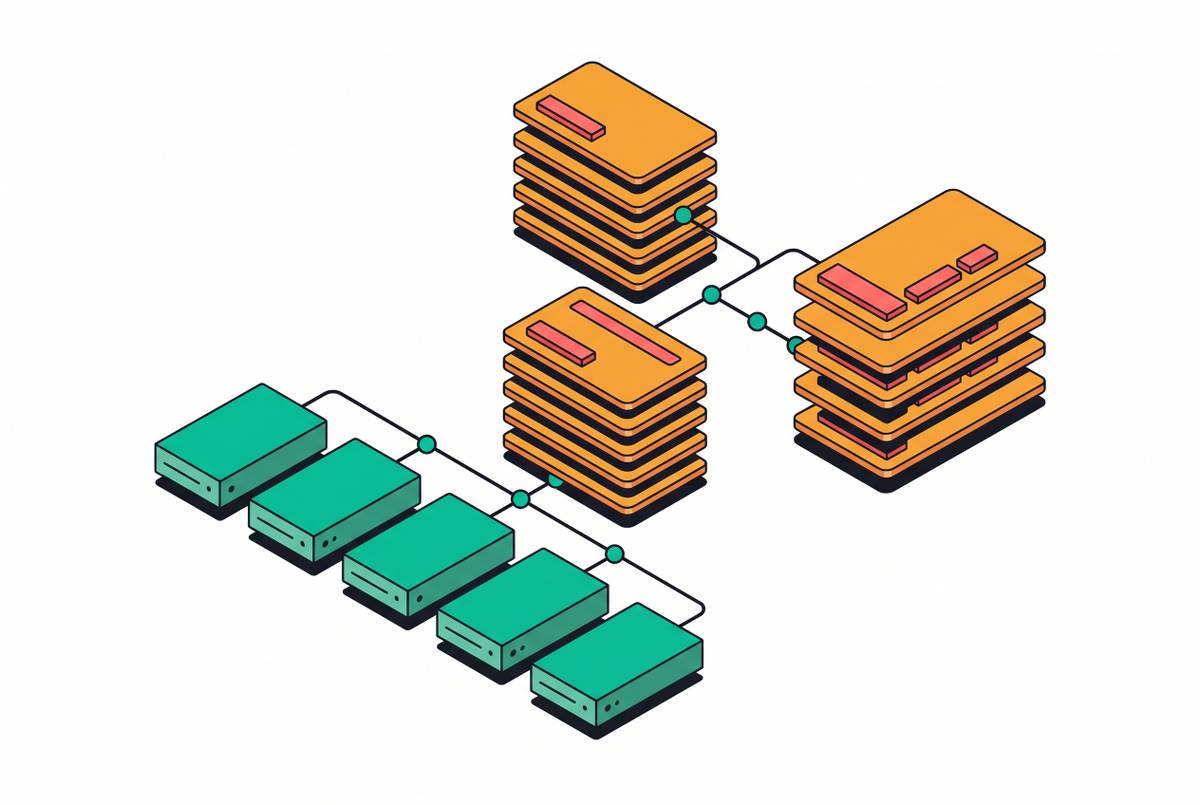
Usage tracking runs on three core layers, among others: an event ingestion layer that captures each billable event when it happens, an aggregation layer that sums events per customer per billing period, and a pricing engine that applies rate cards to those aggregated totals. A gap or delay in any one of the three leaves the close with incomplete numbers at period-end, and because the layers depend on each other in sequence, a failure early in the chain propagates through everything downstream of it. A missing event doesn't just understate one customer's usage; it understates the aggregate, which understates the billed amount, which understates revenue, and the error carries through to the deferred revenue balance before anyone notices.
Missing entries are a documented, recurring failure mode in usage billing specifically because the usage record often isn't created until some batch process catches up. Failing to record incurred usage before period-end understates expenses or liabilities directly, and the fix, a late-arriving correction, lands in a month that's already supposed to be closed. Idempotency, the guarantee that an event is counted exactly once even through an outage or a network partition, isn't a nice-to-have in this context. Without it, double-counted or dropped events turn into disputed invoices, and disputed invoices turn into support tickets that bleed directly into close time.
The delay appears on the calendar. In a representative fourteen-business-day close, the first four days are typically consumed waiting on inputs that arrive on no fixed schedule: bank and card feeds, payroll, vendor invoices, and consumption data. Four of fourteen days gone before any accounting work can start is a meaningful fraction of the close, and it's the part of the problem that usage billing makes worse, because unlike a bank feed, consumption data has no natural cutoff unless someone builds one.
How deferred revenue accounting breaks with consumption-based billing
The deferred revenue waterfall is the load-bearing schedule of any SaaS close, and usage billing breaks it in at least three distinct ways that don't show up in subscription-only books. In a fixed-fee model, the waterfall is almost mechanical: opening balance, plus new bookings, minus amounts recognized, equals ending balance. That ending balance has to tie to the deferred revenue account on the balance sheet every close, and in a fixed model it does, because the amount recognized each month was known the moment the contract was signed.
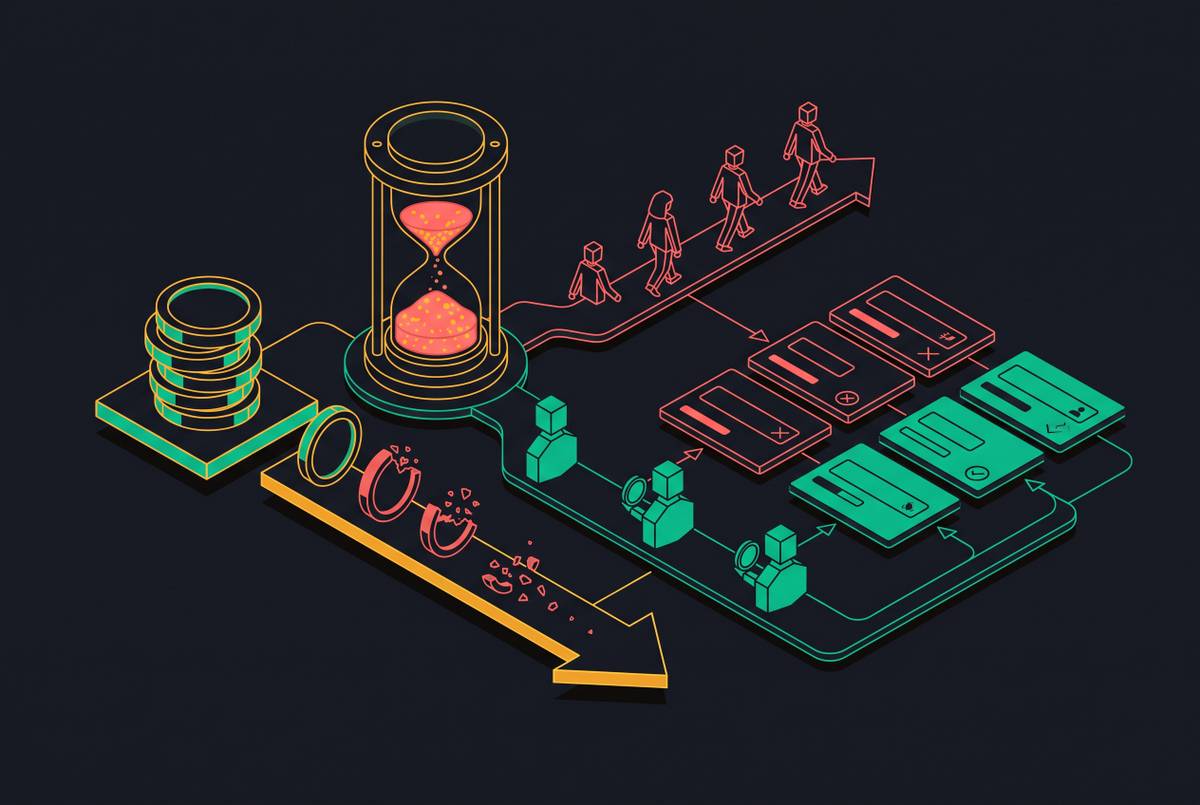
Consumption pricing breaks that certainty at the recognized-amount step. When a customer pre-purchases AI credits or tokens, the cash collected isn't the same thing as revenue earned. The balance sits in deferred revenue until the customer actually consumes the credits, so the opening balance on the waterfall is still correct, but the amount that should move into recognized revenue stays uncertain until the usage data for the period is closed out. A waterfall built for a known monthly release amount doesn't have a clean answer for "how much was actually used this month" until the usage pipeline from the prior section has already done its job.
Breakage adds a second layer on top of that uncertainty. Under ASC 606, companies have to estimate the credits customers are expected to never use and recognize that breakage proportionally as the customer consumes the credits they do use. That estimate depends on historical consumption data, and for a new usage-based product, that history may not exist yet, so early-stage breakage estimates are often built on thin or absent evidence.
Contract modifications are the third complication. A mid-period expansion or contraction in a customer's usage tier requires FP&A to redetermine how each element of the contract should be recognized and to recalculate proration from the point of modification forward. One or two modifications a month is manageable by hand. A high volume of modifications in a short window overwhelms a manual process and raises the error rate in exactly the schedule that has to tie out at close.
Bundled products compound all three problems at once. A bundle with usage components needs a stand-alone selling price for each element and a proportionate discount allocation across elements, a requirement that's workable for a bundle with two components and rapidly becomes unworkable once pricing spans tokens, compute, storage, and platform tiers simultaneously. Each added dimension multiplies the number of allocations the waterfall has to carry, and each allocation is another place for the ending balance to stop tying out.
Where ASC 606 variable consideration estimation breaks down
Usage-based true-ups get booked as variable consideration and recognized as the customer consumes, and the standard is clear about the mechanism. What's harder is the estimate underneath it: the transaction price has to be constrained to the amount for which a significant reversal is not probable. That constraint is where most usage-based revenue recognition goes wrong, because it isn't a bookkeeping step but a forecasting judgment applied to a dataset that often doesn't exist yet.
Early-stage AI products make the problem sharper. Token consumption can spike hard as a customer moves a workload from pilot to production, and that width of possible outcomes means the constraint will exclude most of the estimated upside until the company has built up real, comparable contract history. The defensible position in that situation is to recognize committed minimums plus whatever variable amount actual usage already supports, and to leave the rest unrecognized until the data catches up. Teams that recognize optimistic usage projections instead of actuals are the ones that end up unwinding revenue in a later period, which is its own kind of close-time penalty.
The right-to-invoice practical expedient, under ASC 606-10-55-18, offers some relief for usage-based fees in SaaS and technology contracts, letting a company recognize revenue at the amount it has the right to invoice when that amount corresponds directly to the value delivered. It applies when the allocation is consistent with the standard's allocation objective, and it isn't available for every usage structure. Confirming its applicability with auditors before relying on it is a step finance teams need to take directly, not infer from a prior quarter's treatment.
Re-estimation scales with the number of contracts in force. Every new period, variable consideration estimates have to be revisited across every active contract, a task that's manageable across a few dozen customers and effectively impossible by hand across a few thousand. The error this produces when it goes wrong, an incorrect accrual, meaning revenue or expense booked in the wrong period, violates the matching principle directly and forces a correction in a later month, which slows that month's close in turn.
For PE-backed and pre-IPO companies, the stakes go beyond getting a single month's number right. As revenue shifts from fixed to variable, the predictability of what gets recognized each period changes, and that predictability feeds directly into forecasting, disclosures, and valuation. A buyer or auditor evaluating the business is evaluating the quality of the estimate as much as the number itself.
Reordering the close sequence when revenue is not settled at period-end
The conventional SaaS close runs in a fixed order: data lock, then sub-ledgers, then revenue, then reconciliation, then review. That order works when revenue is fixed, because revenue is one of the fastest tasks to complete. Usage billing turns revenue into the longest and most uncertain task in the close, and because the standard sequence puts revenue in the middle, everything downstream waits on it. The fix is reordering which tasks can run in parallel, and that reordering doesn't require new software to start paying off.
A standard ten-day close calendar, as described in indinero's SaaS close checklist, allocates days one and two to data lock and cash, days three and four to sub-ledgers and accruals, days five and six to revenue and deferred revenue, days seven and eight to review and analysis, and days nine and ten to reporting and documentation. Usage billing breaks the days-five-and-six assumption directly, because revenue can no longer be counted on to settle inside a two-day window.
Several tasks on that calendar don't depend on revenue being settled: accounts payable close, balance-sheet reconciliations, payroll accruals, prepaid amortization, fixed-asset depreciation, and intercompany matching can all run in parallel with revenue work. Mapping which tasks depend on revenue and which don't, then running the independent ones concurrently, is a structural fix a team can make without buying anything.
A firm cutoff calendar is a prerequisite for making that parallelism real. Without fixed deadlines for when the product team delivers consumption data, the close's start date stays variable no matter how the rest of the calendar is drawn up. A cutoff calendar with firm input deadlines can compress input collection from four days down to two, recovering real time at the front of the close.
A soft close, run mid-month on estimated figures, catches revenue anomalies before the hard close starts, so problems get researched while there's no close-week pressure attached to them, and the final review cycle shrinks because fewer surprises are waiting in it. Locking a period once its data is confirmed complete matters just as much: nothing should change in a prior month after that cutoff, and enforcing expense-report and consumption-data deadlines keeps a late submission from reopening a month that was supposed to be done.
The test for whether a close sequence is genuinely necessary or just habitual is to map each task against its owner, its inputs, its outputs, and its upstream dependencies, then trace the critical path. That map will show whether revenue work is actually blocking the reconciliations that follow it, or whether the team has just always run them in that order.
The MRR-to-GL reconciliation gap that usage billing opens every month
Reconciling MRR and ARR against the GL revenue account is standard work in any SaaS close, but usage billing widens the gap between what the billing system reports and what GAAP allows a company to recognize, and that gap is harder to close by hand as volume grows. MRR and ARR are billing-system numbers. Recognized revenue is a GAAP number. In a pure subscription model, recognized revenue lags billed revenue by a predictable interval, a timing issue easy to walk through in a line or two. In a usage model, the gap includes variable consumption, breakage estimates, constraint adjustments under ASC 606, and mid-period contract modifications, and every one of those components needs its own explanation in the reconciliation.
Reconciling MRR and ARR down to the GL revenue account and explaining the delta between them is routine close work, but in a usage model that explanation stops being a one-line note. It becomes a multi-line schedule that ties each component of the delta back to its own accounting treatment, and building that schedule by hand every month is where usage-billing closes lose the most time.
Exporting billing data to spreadsheets and updating revenue schedules manually is the single highest-risk step in a usage-billing close. One wrong cell, one delayed feed, one missing row of usage data produces a deferred revenue ending balance that doesn't tie, and the balance sheet can't close until someone finds and fixes it. That same reconciliation is also the first place auditors look for evidence that a company's revenue recognition controls work, so a team reconciling by hand with no documented method is carrying real audit exposure, not just close-week inconvenience.
Fragmented data, usage figures in one system, contract terms in a second, invoices in a third, delays invoicing and complicates the close further, since pulling from multiple sources to build one reconciliation takes time that a single source of truth wouldn't. Double-posting, a recurring error when systems aren't reconciled or when manual entries skip a control, overstates assets, liabilities, or expenses, and those overstatements become visible in variance review and force a correction before the close can finish.
The number that exposes how reliable a close actually is is the number and dollar value of post-close adjustments, and how often a month that was marked closed gets reopened. A team that closes in ten days and then revises the numbers three weeks later has a slower real close than its calendar suggests, no matter what the calendar says.
What continuous reconciliation and automated revenue subledgers remove from the close
Reconciling only at month-end guarantees that every error in the period has a full month to compound before anyone looks for it. Continuous reconciliation, checked throughout the month rather than once at the end, paired with a revenue subledger that connects directly to the billing system, changes the close from a scramble to confirm numbers into a review that confirms work already done.
Continuous reconciliation compares recognized revenue to billed revenue mid-cycle and flags GL mismatches, missing usage data, and CRM contract sync failures as they happen. Problems found mid-month get researched without the pressure of a closing deadline sitting on top of them, and anomalies checked against recent trailing history get flagged as outliers before they turn into a close-day crisis.
A revenue subledger integrated with billing auto-generates deferred revenue entries as invoices go out and automatically revises schedules when a contract is modified, handling usage-based, milestone, and subscription revenue together instead of requiring separate manual treatment for each. That integration is what removes the spreadsheet step entirely from the riskiest part of the close, the manual export-and-update process that produces the deferred revenue balances that don't tie. A team running continuous reconciliation against an integrated subledger closes faster because most of the reconciliation work already happened before close week started.