Automating Deferred Revenue Schedules From Billing System Event Data
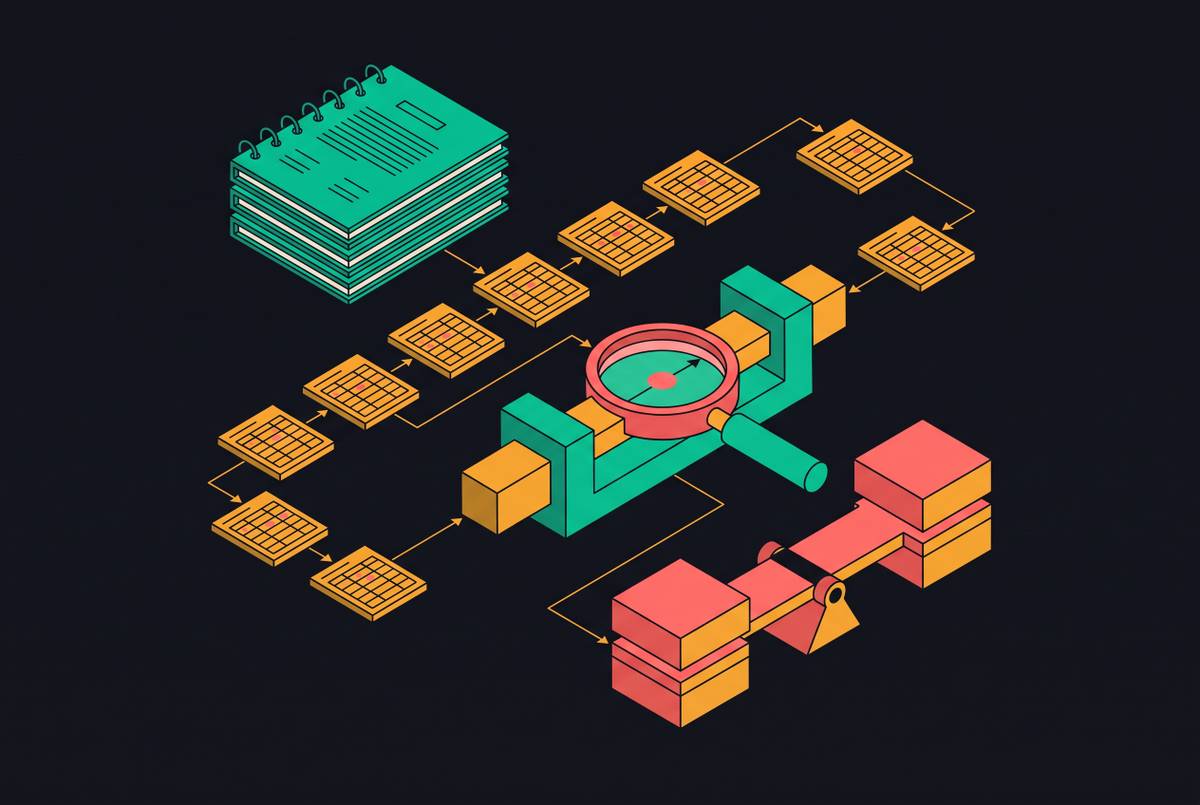
Automating deferred revenue requires billing events to retain accounting detail for each component.
Automating deferred revenue schedules from billing system event data requires more than generating a schedule when an invoice closes. It requires a pipeline that maps each billing event to its accounting treatment and posts the resulting journal entries. For finance and engineering teams, the decisive requirement is preserving enough event detail to distinguish when money is billed from when revenue is earned.
Why deferred revenue is harder to manage when billing events become complex
Deferred revenue is a liability that grows with upfront collections. A flat annual subscription produces a stable schedule, with the prepayment recognized in equal monthly instalments as service is delivered. Rillet's SaaS guide describes the underlying mechanics as debiting cash or accounts receivable and crediting deferred revenue, then debiting deferred revenue and crediting revenue over delivery. The obligation persists after the invoice is settled. It must be tracked continuously throughout the period.
That straightforward pattern breaks when one customer has an advance-billed subscription, usage billed in arrears, prepaid credits, and a mid-cycle upgrade. Each component has a different recognition treatment under ASC 606/IFRS 15. Subscription revenue is ratable, while usage revenue is recognized as usage occurs and prepaid credits as they are consumed. Committed minimums and overages likewise require separate treatment. A single monthly schedule cannot represent all these events correctly.
A modification treated as a new contract leaves the original schedule unchanged and creates a separate schedule for the new obligation. Modifying an existing contract may instead require a catch-up adjustment and a revised forward schedule. Each of the hundreds of mid-term upgrades, downgrades, seat changes, and plan switches therefore needs its own assessment. Manual handling becomes structurally inadequate, accumulating errors such as recognizing revenue at billing or retaining deferred balances past cancellation.
What the billing event stream actually looks like and why it must be the trigger
A discrete billing event must trigger recognition processing. Event-driven processing handles each invoice when it closes rather than waiting for month-end, when finance is already closing the books. The trigger supplies the evidence from which the pipeline establishes or changes the accounting treatment.
Invoice creation and payment events provide subscription identifiers, plan amounts, billing periods, and prorations. Annual prepayments create deferred liabilities, and multi-year arrangements also need the non-current portion to move to current each year. Upgrade and downgrade events require a modification assessment. Depending on that assessment, treatment may involve a separate contract, a prospective adjustment, or a cumulative catch-up. Trial-to-paid conversions establish the performance obligation start date because no contract or performance obligation exists during the free trial.
Usage overage postings support recognition as usage occurs, while credit drawdowns trigger recognition of consumed prepaid balances. Expiration events apply the breakage policy to remaining credits. Cancellation events close out the deferred balances that remain and may reverse recognized amounts under the refund policy. Refund events reduce revenue in the period issued, leaving prior recognition periods unchanged.
These events need enough metadata to avoid human lookups. The data contract must include customer and contract identifiers, billing period timestamps, component-level line items, proration amounts, and a correlation ID linking the event to its originating modification or usage session. Missing context forces manual enrichment downstream.
How the recognition pipeline maps each event type to the correct journal entry
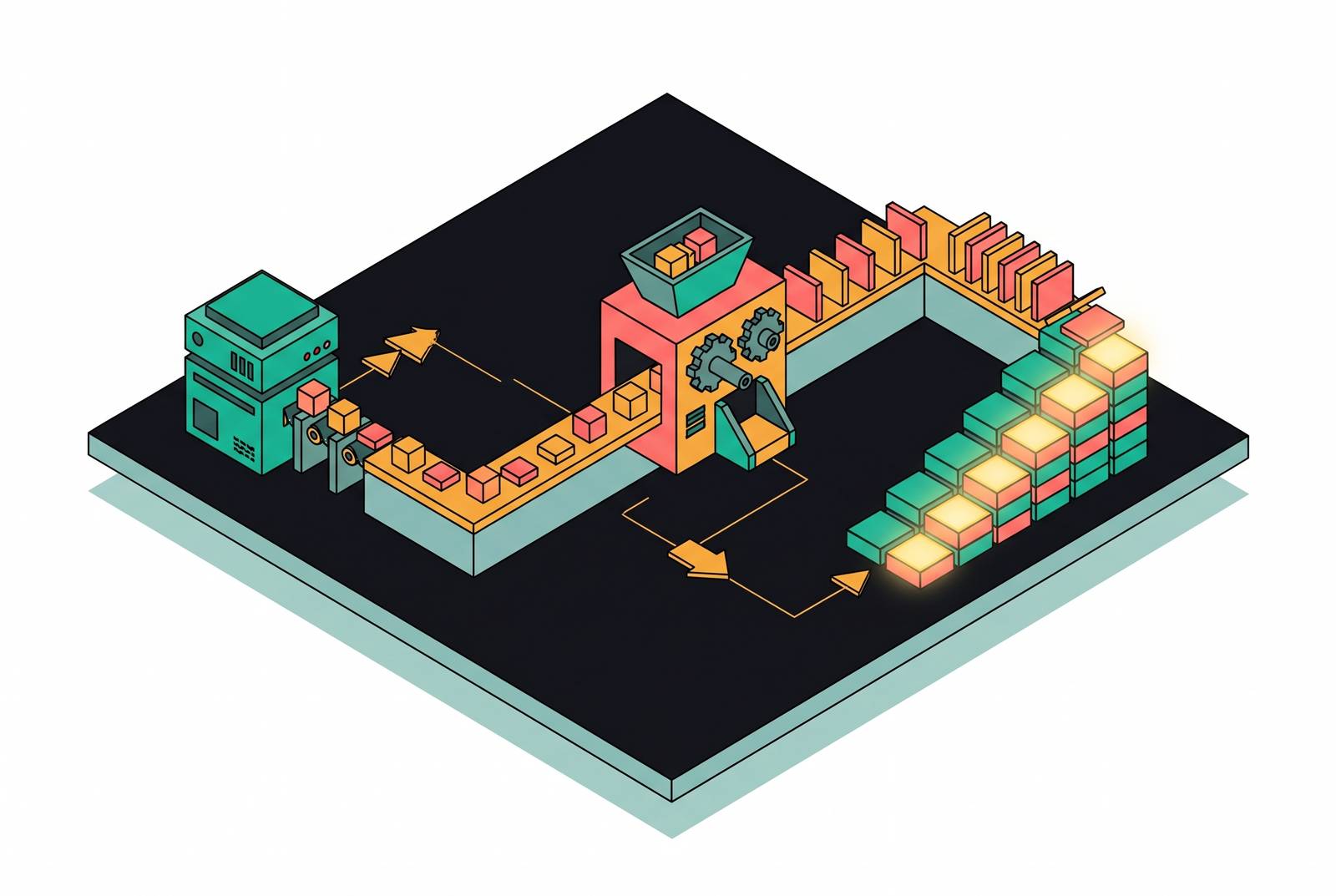
The pipeline has three stages, beginning with event ingestion. Ingestion validates metadata and assigns an idempotency key so duplicate submissions do not produce duplicate journal entries. Without that protection, duplicate invoice events can overstate revenue. Every event should also be persisted before downstream processing. Persistence allows replay if the recognition stage fails.
Contract and obligation resolution is the second stage. The rules engine retrieves the active contract, identifies the applicable performance obligations, and selects the recognition treatment for the event. For multi-element contracts, it allocates the transaction price using standalone selling prices, or SSPs, before calculating recognition amounts. This is where accounting logic lives. A modification requires an assessment of its treatment.
Journal entry generation then calculates the current-period amount and posts the applicable entries to the general ledger. Recognition from a deferred balance debits deferred revenue and credits recognized revenue. For a ratable partial period, the calculation is the invoice amount divided by total contract days, multiplied by days in the reporting period. Usage recognition instead multiplies the metered usage in the period by the rate that applies. Each entry must reference the originating event and governing contract version.
The pipeline should also generate the deferred revenue roll-forward automatically. Opening balance plus new billings minus recognized amounts equals closing balance, reconciled against the GL deferred revenue account. This document supports ASC 606 disclosures and should be available on close day one.
Where the pipeline breaks with hybrid pricing, prepaid credits, postpaid overages, and multi-element contracts
Hybrid pricing exposes the limits of invoice-level schedule templates. A per-seat subscription with AI consumption requires ratable recognition for seats and usage-triggered recognition for consumption. Treating the entire invoice as ratable defers usage revenue that should already be recognized. The reverse also produces an error. Treating everything as consumption-driven understates subscription revenue in low-usage months.
Prepaid credits and postpaid overages create another split within the same product. Credit drawdowns release prepaid balances as consumption occurs, while overages represent usage billed in arrears. These streams must remain distinguishable even when they belong to one contract. If the event data collapses them, the engine lacks a basis for applying different rules. An overage invoice cannot substitute for the underlying usage timing.
For multi-element contracts, errors start earlier, when the transaction price allocation is made. Platform access, implementation services, and ongoing support have separate obligations, SSPs, and recognition timelines. A pipeline that calculates recognition before resolving allocation distorts deferred revenue from inception. Subsequent modifications compound the error because catch-up adjustments use the wrong baseline. At scale, this becomes systematic miscategorization.
Limited usage history requires a judgment about the variable consideration constraint, with the conservative approach recognizing committed minimums plus variable amounts supported by actuals. The rules engine cannot make that policy judgment. Auditors and practitioners diverge on constraint levels for genuinely new arrangements, so correct schedule mechanics alone do not establish an appropriate recognition policy.
What the billing infrastructure must provide for the recognition pipeline to work
Subscription-renewal infrastructure built to produce invoices cannot support hybrid recognition if it aggregates away the distinctions the rules engine needs. A combined invoice line cannot bring back the consumption context that was lost. Nor can a sophisticated recognition engine recover atomic quantities that were aggregated during collection.
The billing data contract must preserve unit and quantity at the event level. It must also provide a correlation ID linking usage to its originating request, session, or agent run, plus a billable flag and reason code explaining the billing decision. Partial-period calculations need the start and end timestamps of the billing period for each line item. Pricing component types must be structured fields. Subscription seats, usage, prepaid drawdowns, and overages cannot depend on parsing description strings.
At millisecond-level event rates, real-time metering and billing must operate as one system. Separating them creates an integration seam where metadata can be lost, delayed, or misformatted before recognition receives it. Prepaid wallets and postpaid invoicing likewise need a common engine and event schema. Billing must decide which charges use up credits and which become overages before it sends the event downstream. That decision does not belong in recognition.
Finance also needs direct visibility into events and applied rules. When every question about accounting data goes through engineering, close takes longer and details that matter may get lost as the question is passed along. Reconciliation reports and audit trails should be available natively. Zenskar's buyer's guide identifies real-time ERP sync and automated journal entry generation with full audit trails as required capabilities for this use case.
How to structure the recognition rules engine for pricing dimensionality that exceeds what templates can model
A multi-dimensional rules engine decomposes invoices into component streams rather than assigning one recognition rate to the total. Subscription seats, token consumption, GPU-minutes, audio minutes, and hardware tiers may represent separate obligations or components of an obligation. The model must preserve that distinction. It must also separate the rate card that prices usage from the rule that determines when revenue is earned.
Four configuration layers make this logic inspectable. Event-type routing maps each event to a rule class, including ratable, usage-triggered, breakage, or catch-up treatment. Obligation resolution then identifies the performance obligations satisfied and the SSP allocation that applies. Period calculation determines the affected reporting periods and computes amounts for partial months, mid-period starts, and multi-period carryovers. Modification handling determines prospective or retrospective treatment, calculates any catch-up, and revises the forward schedule.
Accounting policies belong in explicit, auditable configuration. Finance should be able to inspect, change, and document those policies without an engineering deployment. A hardcoded variable consideration constraint makes an accounting change dependent on a release cycle. It also obscures the prior policy as a distinct configuration version. Pricing configuration and recognition configuration therefore each need a place where their owners can manage them, even when both change because of the same contract change.
The audit trail must cover all four layers. Along with event and contract references, each journal entry needs the recognition rule and policy configuration that were used, plus timestamps for each processing step. These records make the calculation reproducible for inspection. Without them, an auditor cannot establish which policy governed a particular entry without manual reconstruction.
Operational practices that keep the pipeline accurate as contracts and pricing evolve
New dimensions or contract types can enter billing without corresponding recognition rules, leaving a fallback rule to misclassify them. Policy changes create another risk. Applying a revised constraint only to new contracts leaves in-flight schedules unevaluated. The controls must catch both kinds of drift.
Continuous reconciliation should compare the GL deferred revenue balance with the contract registry more frequently than monthly. Exceptions above a defined materiality threshold should trigger alerts before close. The reconciliation delta, measured as billing export variance as a share of revenue, should have an operational SLO. Event coverage monitoring provides a separate control. When an event type arrives without a configured rule, it should trigger an alert so it cannot be lost or given a fallback treatment without notice.
Modification detection should find events that call for changes to existing schedules and flag them for the rules engine to review again. During a move from flat subscriptions to hybrid pricing, both models must remain supported because customer cohorts will have different terms. Shadow billing can validate the new model and expose edge cases without changing customer charges. Legacy customers need legacy rules to stay available indefinitely, so each policy change must keep the old version as well as the new one.
If finance and RevOps spend the first week of the month rebuilding the roll-forward, the response should be architectural. The controls must keep schedules up to date throughout the month.
How to evaluate whether your billing infrastructure can support this pipeline
The central test is whether pricing components arrive as discrete, structured events or must be reverse-engineered from invoices. Credit drawdowns and overages must be distinguishable. Usage events also need to carry correlation IDs, billable flags, and line-level periods so these do not have to be pieced together later from separate metering and billing records. The assessment should also check for rules that finance can configure and for roll-forwards and audit trails that are generated continuously.
Building these capabilities internally has both an upfront cost and a permanent maintenance burden. Engineers will need to keep working on new pricing dimensions, accounting updates, and contract structures. Stytch concluded during its build-versus-buy evaluation that an internal billing system would need a couple of engineers in perpetuity. Recognition adds further maintenance to that commitment. A legitimate reason to build remains a hard data residency requirement that no available vendor meets.
Purpose-built infrastructure should be used when it removes the work of integration and leaves none of that work hidden. Zenskar separates recognition schedule management from billing while retaining contracts as the source of truth, with automated journal entries, real-time ERP sync, and audit trails. API and SDK quality still require scrutiny. Poor interfaces force teams to build the abstraction layer they intended to buy. Where residency requires on-premises or sovereign cloud deployment, the shortlist must exclude options that cannot support it.
No infrastructure choice resolves the variable consideration constraint for novel pricing. Finance should document that policy explicitly in the rules configuration before the pipeline goes live. Automation can carry out the schedules, allocations, and adjustments that follow from that policy. It cannot replace the qualified accounting judgment that determines how conservatively revenue should be recognized.