Role-Based Billing Visibility for Engineering, Product, and Finance Teams
Different teams need different views of billing data to move fast without constant handoffs.
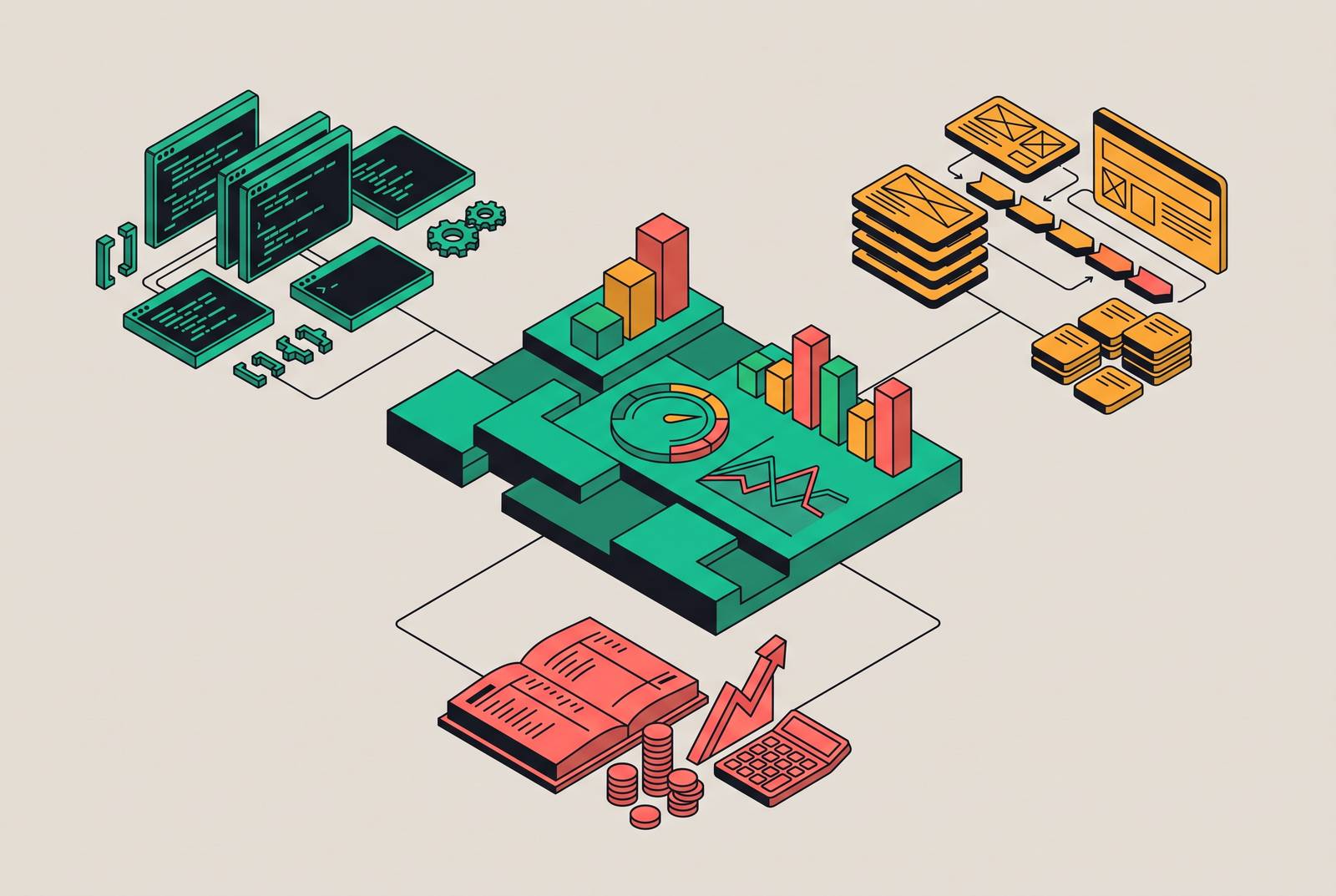
Billing stopped being a finance-only function years ago, and most companies still run it like one. That mismatch is why engineering, product, and finance keep tripping over each other every time a number gets questioned. Each group asks a different question of the same underlying data, and no single dashboard built around one team's mental model can answer all three without someone waiting on someone else's export. The teams that figure this out stop treating billing as a finance report and start treating it as shared infrastructure. The rest keep hiring people whose entire job is translating one team's export into another team's format.
The pressure on this problem has gotten worse, not better. OpenView's SaaS Benchmarks found that 98% of SaaS companies change their pricing at least once a year. Usage-based and credit-based models, now used by something like 85% of SaaS companies, turn billing from a monthly invoice run into a continuous event stream. Each team needs a different slice of that stream, at a different resolution, on a different clock. Role-based visibility, in this context, is an architectural decision about who owns which data and whether they can reach it without filing a request with another department.
What engineering teams need from billing data
Engineers do not care what the company earned last month. They care whether the metering pipeline producing that number is correct, and whether it holds up when traffic spikes.
The questions engineering owns are structural. Are events being captured completely, or are some getting dropped, duplicated, or arriving late? Does the pipeline keep pace with event volume during peak load, or does it fall behind? Is idempotency enforced, so each billable event gets counted exactly once, not zero times and not twice? And what's the lag between a usage event firing and that event showing up, reliably, in the billing system?
Take an AI agent running a multi-step workflow that throws off thousands of billable events per minute. If the metering pipeline falls behind under that load, enforcement logic ends up reading stale state. Customers blow past their limits while the system still thinks they're under. By the time metering catches up, the overage has already happened, the charge is already wrong, and somebody has to explain it after the fact. Most legacy billing tools were built to schedule invoices on a calendar, not to expose what's happening inside a pipeline in real time, so engineering ends up bolting monitoring onto a system that was never built to be watched from the inside.
Avoiding that failure mode takes infrastructure engineering can see directly, not infrastructure someone explains after an incident. Dead-letter queues catch events that failed to process. A replay procedure needs to be tested. Local entitlement caches keep an access check from needing a network round-trip on every request. And there has to be a clean split between fast-path aggregation, approximate, real-time, good enough for enforcement, and slow-path aggregation, exact, invoice-grade, good enough for a customer's finance team to trust.
What engineers need from a billing API is unglamorous but non-negotiable: clean ingestion endpoints, SDKs that don't force an awkward abstraction layer onto existing code, and webhooks that fire when they say they'll fire. A clumsy ingestion API doesn't just annoy engineering. It forces the team to build the exact monitoring and reconciliation tooling they were trying to buy. Disaster recovery belongs on this list too. Recovery time and recovery point objectives for the billing pipeline are an infrastructure question, and treating them as a finance afterthought is how companies end up with billing outages nobody planned for.
What product teams need from billing data
Product teams watch consumption signals because those signals tell them whether the pricing model they built actually works in the market.
Their core questions differ in kind from engineering's. Which features are customers actually using, and at what rate? Where do customers hit a limit, pause, or churn, and is that a pricing failure or a product failure? Is a pricing experiment performing the way it was modeled to perform? Across the whole customer base, is usage spread evenly, or is a small number of accounts driving most of the consumption?
Pricing has become something teams revisit constantly rather than set once a year and forget. Analysis across 500 SaaS companies found more than 1,800 pricing changes in a single year, an average of 3.6 per company. Product teams now make pricing calls on cycles measured in weeks, not fiscal quarters, and credit-based models add a layer product has to see clearly. The PricingSaaS 500 Index recorded 79 companies offering a credit model, up from 35 at the end of 2024, a 126% jump year over year. Pricing a new tier under that model means understanding credit burn rates, whether unused credits roll over, and what triggers a top-up, and a revenue summary shows none of that. Outcome-based pricing raises the stakes further: a company charging per resolution or per agent action instead of per seat needs to see outcome counts directly, or it has no way to confirm the pricing unit is actually tied to the value being delivered.
The clearest case for keeping this data in product's hands, not routing it through two other departments first, is how fast real pricing models have moved. Salesforce's Agentforce launched at $2 per conversation in September 2024, shifted to Flex Credits at $0.10 per action by May 2025, then added per-user licensing at $125 per user per month in June 2025. Three pricing models for one product in roughly eighteen months. GitHub Copilot made its own structural shift, moving plans to usage-based billing in mid-2026 (annual Pro and Pro+ subscribers stayed on their existing premium request-based billing until those plans expired), replacing premium request counts with monthly allotments of GitHub AI Credits calculated from token consumption across input, output, and cached tokens. Copilot Business runs $19 per user per month including $19 in monthly AI Credits; Copilot Enterprise runs $39 per user per month including $39 in credits. Neither transition gets evaluated, let alone executed well, without granular consumption data sitting in front of the people making the pricing call.
Routing that data through finance or engineering first costs product the one thing pricing experiments need most: speed. Industry research has found that a majority of SaaS companies say they can't efficiently accommodate pricing changes with their current billing stack. Testing a pricing hypothesis should take a week. Without direct access to the data, it takes a quarter, because someone has to file a request, wait for an export, clean it up, and reformat it before anyone can even look at the numbers. Product needs granularity: per-customer, per-feature, per-cohort breakdowns, queryable on demand. A monthly revenue total tells product almost nothing useful, and pretending otherwise is how a pricing team ends up guessing.
What finance teams need from billing data
Finance's relationship to billing data runs on trust and defensibility, not real-time monitoring. Nobody in finance needs to watch events stream in live. They need to know that when a number lands on an invoice, it holds up under scrutiny.
The questions finance owns carry the most weight of the three, because they're the ones a customer or an auditor will actually push back on. Is the invoice correct, and can every line item be defended? Has revenue been recognized properly under ASC 606 or IFRS 15? What does next quarter's forecast look like given how consumption is trending right now? Where is revenue leaking out, through unbilled usage, miscalculated overages, or credits that never got applied?
Forecasting AI costs has real teeth to it. A large share of CIOs cite cost forecasting as a leading challenge in AI deployment, and a substantial share of IT leaders report unexpected charges from consumption-based or AI pricing models. On the vendor side, finance faces the mirror image: forecasting revenue off consumption patterns just as volatile as the costs their own customers are complaining about.
Revenue recognition gets genuinely hard once a company mixes subscriptions, usage, credits, and committed spend under one contract. ASC 606 and IFRS 15 require allocating a transaction price across performance obligations and recognizing revenue as those obligations get satisfied, which is simple enough when billing is a flat monthly subscription. Stacking four pricing mechanics under one contract, though, turns it into an accounting problem that a lot of finance teams currently solve by hand in a spreadsheet.
Revenue leakage is the quieter cost, and it's a fidelity problem more than a diligence one. Companies running usage-based pricing lose a real share of revenue to billing errors that never get caught until a customer disputes a charge. Catching that takes billing data granular enough to flag a miscalculation before the invoice goes out, not after. When a company runs multiple billing codepaths side by side, reconciling them eats a real chunk of time at the start of every month, and that time reflects a symptom of architecture, not a diligence gap.
What finance actually needs is a full audit trail. Every credit applied, every overage calculated, every committed-spend minimum enforced, has to trace back to a specific contract term and a specific usage event, not get reconstructed from memory during an audit or pieced together from three different exports. Finance does not have the bandwidth to file a ticket with engineering every time it needs a usage report, or wait on product to hand over a dashboard export that was never built with revenue reporting in mind.
How routing requests between teams creates billing data latency
Once billing data lives in silos, every question that crosses a team boundary turns into a ticket, a chat thread, or a recurring meeting. It rarely gets framed as a billing issue. It gets framed as a communication issue, which misses where the actual failure lives.
The pattern is visible in a few recognizable ways. Finance can't close the books because the usage data sitting with engineering hasn't been reconciled yet. Product can't judge whether a pricing experiment is working because the invoice data sitting with finance isn't broken down by usage cohort. Engineering sees a spike in event volume and can't tell, on its own, whether that's a product adoption win or a pipeline anomaly, because answering that needs revenue context that lives with finance.
None of this scales gracefully. Companies pricing across many dimensions, without one system that can model all of them at once, end up maintaining separate billing codepaths and reconciling them by hand. That reconciliation cost grows with the business instead of shrinking with it.
The AI product category makes latency worse. When a billing pipeline only processes events at the end of the month, a customer can blow straight through a credit limit mid-cycle with zero warning. Given that CIOs broadly rank cost forecasting as a top AI deployment challenge, a customer who can't see consumption in flight is a customer heading toward bill shock, a dispute, and eventually, churn.
The organizational response to all this is almost always more process, such as a weekly sync, a shared spreadsheet, or a manual export somebody now owns full-time. That response quietly turns a tooling gap into a headcount problem, and it's a bad trade, because none of that process fixes the latency. It just staffs around it, indefinitely.
What role-based billing visibility means in a platform built for it
Role-based visibility is not role-based access control bolted onto one dashboard. Giving three teams different permission levels on the same screen doesn't solve anything if that screen was built around one team's questions to begin with. Most billing dashboards were built around finance's questions specifically, and that is why engineering and product keep working around them. Real role-based visibility means each team gets its data in the shape it actually needs, without depending on another team to clean it up first.
For engineering, that means pipeline observability native to the platform: event ingestion status, idempotency guarantees, dead-letter queue counts, latency metrics, replay status, exposed directly, not bolted onto a billing UI built for people closing the books. For product, it means consumption data queryable by customer, by feature, by cohort, by time window, with enough granularity to actually evaluate a pricing experiment or model a new tier before committing to it. For finance, it means invoice-grade audit trails, support for revenue recognition workflows, automatic reconciliation between metering data and invoice line items, and forecasting inputs built off real consumption curves rather than a usage export somebody scrubs in a spreadsheet every month.
Metering and billing belong in one system, and splitting them into two products stitched together through an integration is the wrong call, no matter how clean the integration looks in a sales demo. That split forces every team to cross a seam to reach another team's data, and the seam is exactly where visibility breaks down. Pricing configuration makes a good test case: a platform that lets product change pricing directly, without opening an engineering ticket, is meeting a real role-based visibility requirement. Given that a majority of SaaS companies say their current billing stack can't accommodate pricing changes efficiently, getting this right is not a small thing.
The same logic applies to prepaid and postpaid mechanics. When credit wallets and standard invoices run on one engine, finance can see a customer's total liability in a single place. Split those across two systems and reconciliation becomes manual, by definition, no matter how skilled the people doing it are. For enterprise customers with data governance rules that rule out SaaS-only tools, role-based visibility has to extend to deployment itself: the platform needs to run where the customer's data is required to live, including on-premises or in a sovereign cloud.
Practical steps for auditing whether your current billing stack gives each team what it needs
Testing whether a billing stack actually delivers role-based visibility doesn't take a formal review process. It takes one diagnostic question per team, and an honest answer about whether that team can resolve it without routing through someone else.
For engineering: can anyone see, right now, how many events got dropped or retried in the last hour, without pulling a separate log system? Is there a replay procedure for billing events that's documented and actually been tested, and does the billing platform support it natively? Does the ingestion API return idempotency keys and confirm exactly-once accounting, or is that just assumed and hoped for?
For product: can consumption be queried by cohort, say, customers on a given plan who burned more than a set number of credits last month, without asking finance or engineering for an export? Can a new pricing tier or credit bundle be modeled against last month's actual usage without kicking off an engineering sprint? Looking back at the last pricing change made, how long was the gap between deciding on it and seeing it reflected in actual customer invoices?
For finance: can any invoice line item be traced back to the specific usage events that generated it, without requesting a log pull from engineering? Does the billing system output what the revenue recognition workflow actually needs, or does someone clean up a usage export in a spreadsheet first? When a customer disputes a charge, does the audit trail come straight out of the billing platform, or does someone reconstruct it by hand across multiple systems?
A few signs point to a visibility problem rather than a simple tooling gap. Any team needing a recurring sync with another team just to answer its own questions is one. The first week of every month getting eaten by reconciliation instead of actual analysis is another, and so is needing engineering involvement to make a pricing change stick. Running customer-facing usage dashboards on a separate pipeline from the one that generates the actual invoice belongs on that list too. It creates two sources of truth that will eventually disagree with each other, and when they do, someone in support has to explain the gap to an angry customer.
A resolved architecture looks different on all three fronts at once. Each team answers its core questions independently. Pricing updates without an engineering ticket. Invoices reconcile automatically against the underlying usage data. And the numbers a customer sees on their own spend dashboard come from the exact same event stream that generates their invoice, so there's nothing left to reconcile because there was never a second version of the truth to begin with.