Revenue Recognition When Your SaaS Has Subscriptions, Usage, and Prepaid Credits
Hybrid contracts force three separate revenue clocks onto one billing relationship.

Revenue recognition for SaaS companies used to be a solved problem. When a SaaS product combines subscriptions, metered usage, and prepaid credits simultaneously, each revenue stream follows different recognition timing rules under ASC 606, and the hardest part is not learning those rules individually but understanding how they interact, conflict, and compound when sitting on the same contract and the same billing engine.
Why hybrid SaaS contracts break revenue recognition in ways that subscription-only playbooks never anticipated
The old model was simple enough to fit on an index card. One contract, one performance obligation, revenue recognized ratably over the term. Clean, predictable, and easy for an auditor to trace from invoice to ledger without much friction.
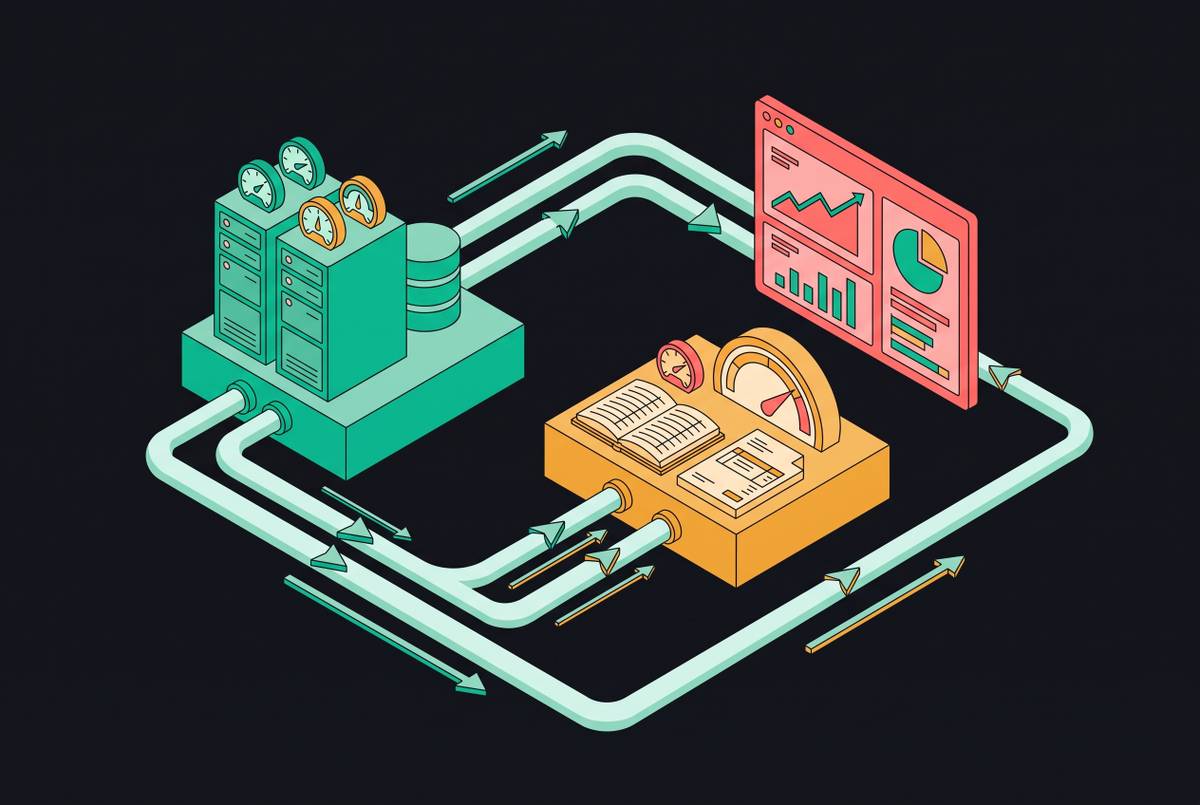
Hybrid contracts don't break that model because any one piece of them is hard on its own. A subscription is well understood. Usage billing is well understood. Prepaid credits are well understood. What makes the arrangement genuinely difficult is that all three can live on a single contract at once, invoiced through a single billing engine, and each one recognizes revenue on a different schedule. A flat subscription fee recognizes ratably across the term. Metered usage recognizes only as it's consumed. Prepaid credits recognize only as they're drawn down. Three separate clocks, ticking at three separate speeds, on one customer relationship.
This piece stays focused on the accounting mechanics behind that collision and the billing infrastructure required to support it correctly, not on pricing strategy or go-to-market design. Understanding each stream on its own terms comes first. What happens when they sit together on one contract comes after.
What ASC 606 requires when a contract mixes fixed and variable consideration
Revenue should be recognized to depict the transfer of goods or services to a customer in an amount that reflects the consideration to which the entity expects to be entitled in exchange for those goods or services. That's the whole standard, in essence. Everything else is mechanics built to enforce that one idea.
The five-step model applies to every contract regardless of its structure, but hybrid arrangements put unusual strain on three of the five steps in particular. Identifying performance obligations in Step 2 gets murky fast: subscription access, usage capacity, and a prepaid credit pool might each count as a distinct obligation, or they might not, depending on whether the customer can benefit from each one independently of the others. Step 3, estimating the transaction price, requires a company to estimate variable consideration from usage at the very start of the contract and constrain that estimate to the amount unlikely to reverse later, which turns an unknown consumption pattern into a formal accounting judgment rather than a fact waiting to be observed. Step 4, allocating the price across obligations, demands that any bundled discount get spread across obligations using standalone selling prices, so a discount that applies economically to a subscription and a credit pack together can't just sit on whichever line happens to be administratively convenient.
Multi-year prepaid deals raise a separate question entirely: whether a significant financing component needs to be recognized. Under ASC 606-10-32-15 through 32-20, the practical expedient that lets companies ignore this only applies when the gap between payment and delivery is a year or less. A three-year prepaid arrangement doesn't qualify, and companies structuring long-term prepaid credit deals need to know that going in, not after the audit starts asking questions.
Collectibility thresholds and disclosure requirements are where the differences that actually matter appear, not the underlying recognition logic. And the accounting choices made here aren't confined to the books. The standard itself doesn't tell a finance team how to build the systems that produce compliant numbers. It only tells them what the output has to look like. Producing that output at scale, across three revenue streams simultaneously, is the actual problem. Under IRC Section 451's AFS income inclusion rule, a company must recognize at least as much revenue for tax purposes as it recognizes in its applicable financial statements, so timing choices in the books have direct tax consequences.
Where subscription revenue recognition gets complicated before usage even enters the picture
Start with the clean version, because it really is clean. A customer prepays $12,000 for an annual plan SaaS Revenue Recognition Under ASC 606: Implementation Guide SaaS Revenue Recognition ASC 606 Guide 2026 - SpryTax. The company recognizes $1,000 a month as service is delivered, and the unearned portion is in deferred revenue on the balance sheet until it's earned SaaS Revenue Recognition Under ASC 606: Implementation Guide SaaS Revenue Recognition ASC 606 Guide 2026 - SpryTax. Whether that customer pays monthly or annually changes when cash arrives, not when revenue gets recognized: both cases recognize ratably over the service period regardless of billing cadence.
The complications start well before usage enters the conversation. A mid-term upgrade is a contract modification event, and it forces a fresh assessment under ASC 606: does the modification add distinct services priced at their standalone value, in which case it's treated as a new contract on a prospective basis, or does it change the existing scope at a price that isn't standalone, in which case it requires a cumulative catch-up adjustment that flows through the current period's revenue? Downgrades raise the same question in reverse, and often trigger credits or refunds that adjust deferred revenue and shift recognition timing in ways that need to be tracked carefully.
Bundled elements that aren't obviously "subscription" complicate things further. Implementation fees, onboarding, training: if these aren't distinct standalone obligations, a setup fee that looks like it should be recognized on delivery may actually need to spread across the life of the subscription instead. Multi-year prepayments compound the difficulty, since the deferred revenue balance grows large, the financing component resurfaces as an issue, and the audit trail has to hold up across several fiscal years without gaps.
None of this is manageable by hand once volume increases. A finance team tracking modification events in a spreadsheet across hundreds of active contracts is not producing reliable numbers, and that fragility becomes far more dangerous once usage variability gets layered on top. Deferred revenue itself deserves to be treated with some seriousness here: it's a liability. Investors and auditors read it as evidence of future obligations still owed to customers, and releasing it improperly is a finding that appears during fundraising due diligence or an acquisition's financial review.
Why variable consideration estimation is the hardest accounting judgment in the model
Usage revenue recognizes as consumption happens, in the period the usage actually occurs, not ratably across the contract and not all at once at signing. For usage billed in arrears, which is the common pattern, revenue is recognized in the period the usage takes place, and the numbers get trued up once actual figures post.
The harder case is usage estimated across a longer contract period, where the standard requires three distinct steps. First, the company estimates the transaction price at inception, even though actual consumption is unknown at that point. Second, that estimate gets constrained: only the portion the company is highly confident won't later reverse can be recognized, and an aggressive estimate here produces an audit exception. Third, the estimate has to be revised every reporting period as real data comes in. A number set in month one cannot simply carry forward to month twelve without revision.
That constraint requirement isn't a workaround waiting to be optimized away. It's the standard doing what it's designed to do: protecting against revenue getting booked before the company can actually stand behind it. Operationally, this only works if there's a metering ledger that closes cleanly every reporting period. If the usage data sitting in the billing system doesn't reconcile against what the accounting system shows, the constraint calculation simply can't be performed with any confidence.
And the pressure here is not shrinking. Recent industry survey data (Revenera's 2025 Monetization Monitor) found 59% of software companies expect usage-based approaches to grow as a share of their overall revenue, an 18% increase from 2023 Usage-Based Pricing for SaaS and AI: Your Complete Guide. That means the estimation problem isn't a one-time setup task finance handles during implementation and then forgets. It recurs every single period, for as long as usage-based revenue keeps growing as a share of the business.
Why credit wallets create a distinct deferred revenue liability that behaves differently from subscription deferred revenue
Credit-based billing works differently from either subscriptions or straight usage billing, even though it resembles both. A customer prepays a lump sum, and each metered unit of usage, tokens, API calls, agent runs, whatever the underlying unit is, draws down that balance at a defined rate. The arrangement blends an upfront commitment with genuine consumption flexibility.
Revenue recognizes as credits get consumed, because consumption is the point at which the performance obligation is actually satisfied, not the moment cash arrives in the bank account. A concrete version: a customer buys a $60,000 credit pack and burns through 20% of it in the first month SaaS Revenue Recognition Under ASC 606: Implementation Guide SaaS Revenue Recognition ASC 606 Guide 2026 - SpryTax. Only $12,000 gets recognized as revenue that month; the remaining $48,000 sits on the balance sheet as deferred revenue, a liability still owed in the form of future service SaaS Revenue Recognition Under ASC 606: Implementation Guide SaaS Revenue Recognition ASC 606 Guide 2026 - SpryTax.
Subscription deferred revenue unwinds on a fixed schedule: time passes, revenue releases, the calendar does the work. Credit deferred revenue unwinds on a consumption schedule instead, driven by usage events the customer controls, at a pace that has nothing to do with the calendar. A customer who consumes slowly leaves a deferred balance sitting on the books well past the nominal contract term. A customer who burns through credits fast releases that revenue faster than the contract length would suggest to anyone glancing at the terms alone.
Credits issued as concessions or goodwill adjustments need to be sorted carefully too: if a credit relates to current-period performance, it reduces revenue; if it relates to a future period, it adjusts deferred revenue instead. The distinction determines which line on the financials actually moves. Cancellations raise their own question. If a customer cancels and the remaining prepaid balance is non-refundable with no further performance obligation outstanding, the remaining deferred revenue gets recognized immediately as earned. That's not a policy choice a finance team gets to make differently depending on preference; it follows directly from the standard. Expired, unused credits raise a related but separate question around breakage, and whether a company can recognize an expectation of breakage depends on whether it has historical utilization data to support that estimate. Without that data, conservatism is the only defensible position. None of this holds together without a credit ledger that tracks balance, consumption rate, and remaining obligation for every customer in something close to real time. Without it, the deferred revenue number reported at period end is, at best, an educated guess.
Where the three streams collide: the specific recognition conflicts that emerge when all three sit on one contract
Here is the actual center of the problem. ASC 606's five-step model gets applied once per contract, but a hybrid contract contains obligations that recognize on three separate clocks at once, and the estimation and allocation decisions made in steps 3 and 4 touch all three streams simultaneously.
Allocation is where this appears first. When one bundled price covers a subscription, metered usage, and prepaid credits together on one contract invoiced by one billing engine, the discount embedded in that bundled price has to be allocated across all three obligations. A discount that's easiest to book against the subscription line can't stay there if it economically belongs, even partly, to the credit pack instead. Estimation compounds the difficulty further: the variable consideration estimate built for metered usage interacts directly with the credit consumption forecast, and if usage runs past the credit balance and triggers overage charges, that overage becomes its own variable consideration element requiring its own estimate and its own constraint, separate from the credit drawdown calculation sitting next to it.
Contract modifications get harder too, not easier, once three streams are involved. A customer who upgrades their subscription tier and adds credits in the same transaction requires a modification assessment across the whole contract, turning what would be a routine reassessment on a subscription-only deal into a multi-obligation review.
The invoice itself becomes a source of risk. A single invoice can carry a subscription line recognized ratably, a usage line recognized as incurred, and a credit balance line recognized as consumed, and the invoice total is not the period's revenue figure under any circumstance. Those three lines have to route to three different accounting treatments without someone manually sorting them out invoice by invoice once volume increases. Closing the books at period end means reconciling the subscription recognition schedule, the usage metering ledger, and the credit consumption ledger against each other, three separate data sources that all need to agree before revenue can be stated with confidence, and if the billing system and the accounting system don't share a common event log, that reconciliation becomes a manual, error-prone exercise every single close. Auditors, for their part, will test the variable consideration estimate, the constraint calculation, and the deferred revenue balance for each stream, and on a hybrid contract all three get tested simultaneously, so an inconsistency discovered in one stream's treatment can undermine confidence in the others.
What the billing infrastructure must be able to do for the accounting to be correct
The billing system underneath the accounting treatment described above has to produce the right inputs automatically, or none of it is achievable. Recognition schedules, consumption events, credit ledger states: these all have to come out of the billing engine accurately, not get reconstructed by hand at close.
A billing system built for hybrid revenue recognition needs a metering ledger that closes cleanly every period, with usage events timestamped and attributed to the correct contract and obligation, reconcilable against the accounting system without a manual export process standing in between. It needs a credit wallet that tracks balance, consumption rate, expiration, and remaining obligation continuously as a live, ongoing state. It needs a contract modification log that records every plan change, credit top-up, upgrade, and downgrade as a discrete, timestamped event alongside the state that preceded it, because the ASC 606 modification assessment depends entirely on knowing what changed and when. It needs invoice lines separated by recognition pattern, so subscription, usage, and credit consumption appear as distinct, identifiable streams in the underlying data rather than collapsing into a single invoice total. And it needs to support prepaid and postpaid mechanics on one engine at the same time, since credit wallets and arrears-billed overages aren't competing billing paradigms for a hybrid customer, they're concurrent features of the same contract running in parallel.
Much of the reconciliation risk described earlier traces back to the two-vendor setup: a metering tool feeding into a separate subscription billing tool was never built to produce the kind of unified event log an accounting system needs for recognition, and the integration gap between the two systems is precisely where reconciliation errors tend to originate. Real-time ingestion of usage events matters here for reasons beyond billing accuracy. If usage events sit in a batch queue and only arrive in the accounting system days after they actually happened, the credit ledger balance at period end can't be stated correctly without a manual adjustment layered on top. Pricing changes matter operationally too: when finance or product teams adjust a credit burn rate, an overage rate, or a tier boundary mid-contract, that change has to flow through to the recognition schedule without requiring an engineering ticket, because every delay in updating a pricing dimension creates a matching gap in the recognition record. Building this in-house is not a one-time cost; it's a permanent maintenance obligation, since every new pricing dimension, every new recognition pattern, and every new audit requirement has to be built and maintained indefinitely by whichever engineering team owns it.
Practical policies finance teams need before the next audit
Every finance team running a hybrid revenue model needs a written variable consideration policy on file, one that spells out how estimates get constructed, which data sources feed them, what constraint methodology gets applied, and how often those estimates get revised. Auditors ask for this as a standalone document.
Standalone selling prices need to be established and documented for every obligation in a hybrid contract, covering the subscription tier price if it were sold alone, the credit pack price if it were sold alone, and the overage rate treated as its own standalone usage product. These figures need to be defensible on their own terms, not reverse-engineered after the fact from whatever the bundled contract price happened to be.
A credit breakage policy needs to exist in writing too, specifying what historical utilization data the company relies on, what breakage rate that data supports, and how often the assumption gets revisited. A company without enough utilization history to support a breakage estimate should default to assuming zero breakage until the data exists, and should document that choice rather than leaving it unstated. And every contract change event, whether it's an upgrade, a downgrade, or a credit top-up, needs to automatically trigger a documented modification assessment. Leaving that trigger to manual judgment is precisely how inconsistent treatment creeps into the books, one contract at a time, until an auditor finds the pattern.